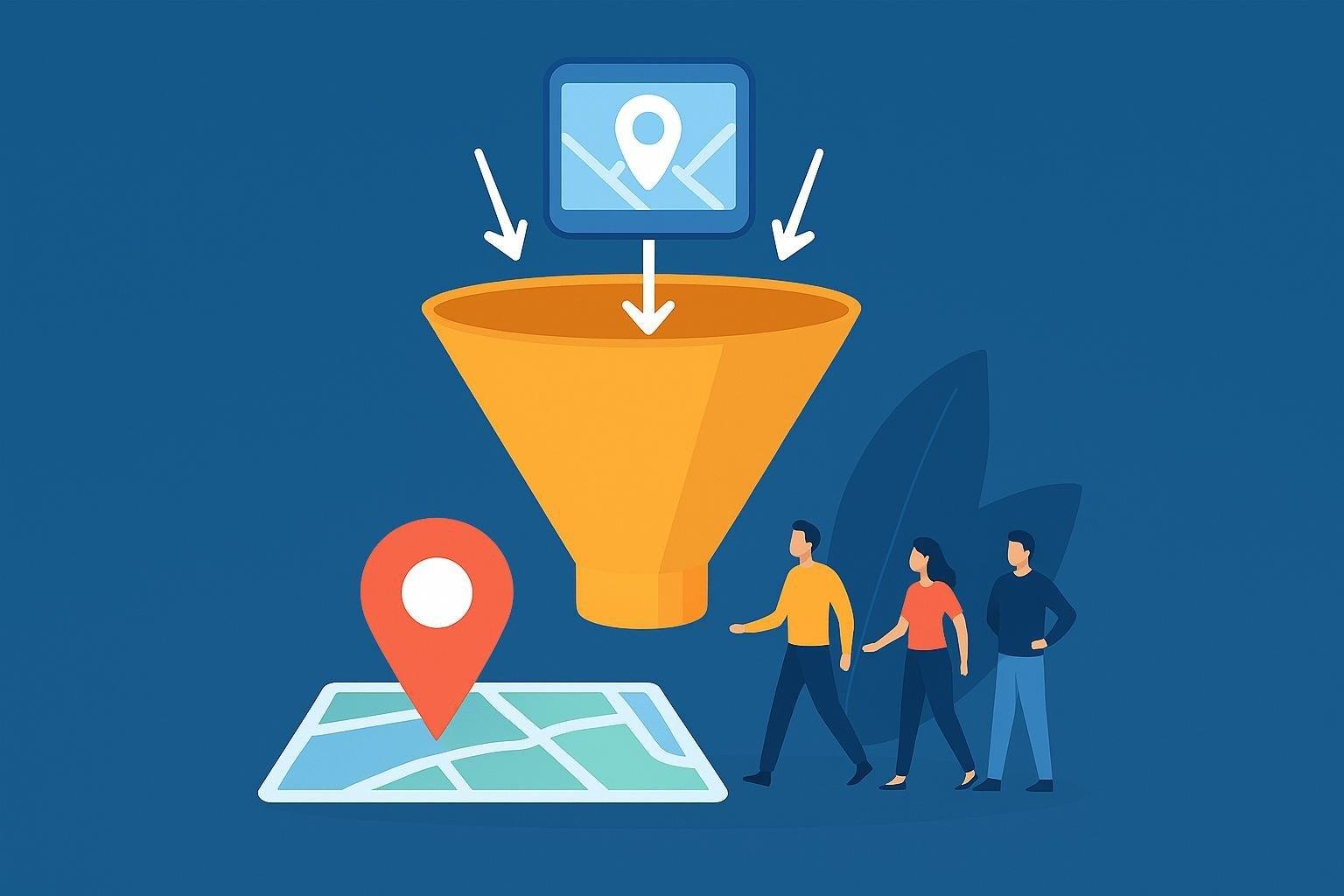
If you have a local business or are thinking of launching one, you are probably interested in attracting nearby customers who are looking for exactly what you offer. Geolocation is a key technique to achieve this goal, as it allows you to segment your digital marketing campaigns to specific audiences based on their geographic location.
Thanks to geolocation, you can optimize your resources and significantly increase the effectiveness of your promotional actions, attracting potential customers who are physically close to your business. In this article you will discover why it is so important to use this tool and how to implement it easily in your local marketing strategy.
Index
- Key benefits of using geolocation in local marketing campaigns
- How to effectively segment audiences using geolocation tools
- Practical examples of successful geolocation-based local campaigns
- Common mistakes when implementing geolocation and recommendations to avoid them
- Trends and future of geolocation-based local marketing
- Frequently Asked Questions
- In conclusion
Key benefits of using geolocation in local marketing campaigns
By using geolocation in your local marketing campaigns, you can accurately and effectively target people who are close to your business. As a result, your messages will be much more relevant to your audience, increasing the likelihood of attracting potential customers and generating immediate sales.
Key benefits of this strategy include:
- Increased relevancy: Your ads are shown only to people located in specific geographic areas, ensuring that you impact the right audience.
- Cost reduction: By focusing your advertising investment on specific areas, you optimize your budget, avoiding spending money on audiences that are too far away to visit you.
- Improved user experience: Your location-specific promotions and offers increase customer satisfaction and build loyalty with your local audience.
In addition, you can take advantage of the information obtained through geolocation to identify areas with high commercial potential or detect useful patterns for future campaigns. This gives you a competitive advantage by anticipating the specific needs of each area and adapting your commercial actions accordingly.
How to effectively segment audiences using geolocation tools
To perform effective targeting using geolocation tools, the first thing you must define is the geographic area you want to impact. Advertising platforms such as Google Ads or Facebook Ads allow you to delimit audiences according to cities, zip codes or even specific radiuses around your business. For example, if you have a coffee shop in the center of Madrid, you could target ads only to users located within a radius of 2 km around your business.
In addition, you can take advantage of advanced techniques to further refine your segmentation:
- Geofencing: creation of virtual boundaries around specific locations to send personalized messages and promotions when users enter or leave the area.
- Behavioral geo-targeting: target users based on mobility patterns or locations they frequent, enabling highly relevant communication.
Always remember to measure the results of your campaigns to continuously optimize targeting. Below is a clear example of key metrics you could follow to evaluate geolocation-based campaigns:
| Metric | Description | Ideal example |
|---|---|---|
| Click-through rate (CTR) | Percentage of clicks over impressions | > 4% |
| Cost per visit (CPV) | Average cost per new physical visitor to the premises | < 2€ |
| Local conversions | Number of customers who visit the business after seeing the advertisement | > 20 per week |
Practical examples of successful geolocation-based local campaigns
To show you how you can apply geolocation to your business, here are some practical examples of local campaigns that have achieved excellent results:
- Local coffee shop with mobile promotions: A coffee shop took advantage of geolocated ads on social networks to show special offers to nearby users. Result: 30% increase in daily visits.
- Gym with push notifications: A neighborhood gym used location-based push notifications to remind users of their workout schedules. Result: 20% increase in monthly attendance frequency.
- Fashion store and proximity discounts: A local boutique sent automatic discount coupons when it detected potential customers near the store. Result: 15% increase in weekly sales.
See the following summary table with the results obtained in these campaigns:
| Business | Strategy Used | Result Obtained |
|---|---|---|
| Cafeteria | Local social ads | 30% increase in daily visits |
| Gym | Geolocated push notifications | 20% increase in monthly attendance |
| Fashion boutique | Automatic coupons by proximity | 15% increase in weekly sales |
As you can see, applying geolocation strategies is accessible and effective, even if your business is small and you have no previous experience in digital marketing.
Common mistakes when implementing geolocation and recommendations to avoid them
One of the most common mistakes is to assume that all users within the same geographic location have similar interests or behaviors. For example, showing ads for a gym to people over the age of 70 may not be effective. To avoid this, always use combined targeting of location and demographics or specific interests of the target customer.
Another common failure is not correctly adjusting the range of your campaigns. If your business is local and only attracts customers within 5 kilometers, it makes no sense to show advertising to people located further away. Clearly define your catchment area and limit your ads to that specific area to optimize your advertising spend.
In addition, it is common to neglect mobile optimization in geolocation-based campaigns. Most of your potential customers will search from their phones when they are close to your physical business. Make sure your website is fast, responsive and easy to navigate from mobile devices.
Here is a quick summary of key errors and recommendations:
- Mistake: Not segmenting by interests or demographics.
Recommendation: Combine geolocation with accurate user data. - Mistake: Radius too wide.
Recommendation: Define a radius adjusted to the real coverage of your business. - Mistake: Ignoring the mobile experience.
Recommendation: Optimize your website and ads for mobile.
| Common error | Effective solution |
|---|---|
| Do not personalize messages based on location | Include relevant local names or references |
| Do not evaluate results by specific zones | Analyze metrics by regions to optimize campaigns |
| Failure to update local information regularly | Keep schedules, promotions and data constantly updated |
Trends and future of geolocation-based local marketing
Location-based marketing is evolving rapidly thanks to technological developments and changing consumer habits. In the coming years, tools such as geolocated push notifications, hyper-targeted advertising and personalized real-time experiences are expected to be key to capturing the attention of nearby customers.
In addition, emerging technologies such as augmented reality (AR) and artificial intelligence (AI) will allow you to create even more effective campaigns. For example, you will be able to offer personalized promotions when a customer passes near your business or use AR to display products directly on the user’s cell phone.
The main trends in local marketing based on geolocation include:
- Augmented reality: Real-time immersive experiences to attract customers to your business.
- Big data and AI: Accurate segmentation based on consumer behavior patterns and preferences.
- Advanced Geofencing: Creation of specific virtual areas to capture potential customers nearby.
- Voice search: Content optimization for fast and easy local searches.
Being aware of these trends will allow you to anticipate and maximize the potential of your local campaigns.
Frequently Asked Questions
What is geolocation applied to local marketing?
Geolocation applied to local marketing is a strategy that uses information about your geographic location to deliver content, ads and promotions tailored specifically to the area where you are. This technique allows businesses to target their advertising and promotional efforts more precisely, thus increasing the effectiveness of their campaigns.
Why is geolocation important in local marketing campaigns?
Because it allows businesses to connect with potential customers who are physically close, increasing the relevance of the message and the chances of conversion. Thanks to geolocation, you can receive targeted offers exactly when you are near establishments, which increases the likelihood that you will decide to go in and buy.
How does geolocation help optimize your marketing budget?
Geolocation allows you to focus your advertising budget on a specific audience, avoiding wasting resources on users who are outside the target area. In this way, you optimize your investment by ensuring that your messages only reach people who are most likely to be interested in your products or services.
What are some specific local marketing techniques based on geolocation?
Among the most common techniques are geofencing (setting up a virtual perimeter around the business to send messages to the user who enters it), geotargeting (sending targeted ads based on the user’s geographic location) and local SEO (optimizing your website to appear in search results of users near your business).
How does geolocation benefit your potential customers?
Your potential customers receive relevant information just when they need it, facilitating decision making and improving their consumer experience. By receiving promotions and offers tailored to their location, they perceive your messages as timely and useful, which strengthens their relationship with your business.
Are there any disadvantages or challenges in applying geolocation?
Yes, although geolocation offers many advantages, it also presents some challenges, such as privacy concerns on the part of users. It is important to manage personal data properly and to use geolocation tools in a transparent and ethical manner, always informing users about how and for what purpose their information will be used.
How can you measure the effectiveness of your geolocation-based marketing campaigns?
You can measure effectiveness through indicators such as physical visits to your business, increase in local sales, conversion rate of geolocalized ads or interaction with specific promotions. In addition, specific analytical tools will allow you to accurately evaluate the performance of each action taken.
In conclusion
As you have seen, geolocation is a key tool to optimize your local marketing campaigns. It not only allows you to reach the right audience at the right time, but also to maximize the return on your advertising investment.
Remember that knowing your ideal customer in depth and making the most of available technologies will make the difference in your business. Precision in your marketing actions can turn occasional visitors into loyal customers.
If you have not yet integrated geolocation strategies into your campaigns, now is the perfect time to start. Experiment, analyze results and constantly adjust your actions to get the best possible results.
Are you ready to take your business to the next level by leveraging geolocation? Success is closer than you think.