Artificial intelligence (AI) has revolutionized the way companies reach their target audiences, offering advanced tools to personalize advertising messages and optimize digital campaigns. If you’re looking to expand your knowledge on how to leverage this technology to power your online business or digitize your traditional enterprise, it’s critical to understand what AI is and how it can help you achieve better results.
In this article you will discover the basics of artificial intelligence applied to digital advertising, exploring practical and simple examples so you can take your first steps without prior technical knowledge. In addition, you will learn how AI allows you to perform predictive analytics, automate processes and create more relevant and effective ads that increase the return on your advertising investment. 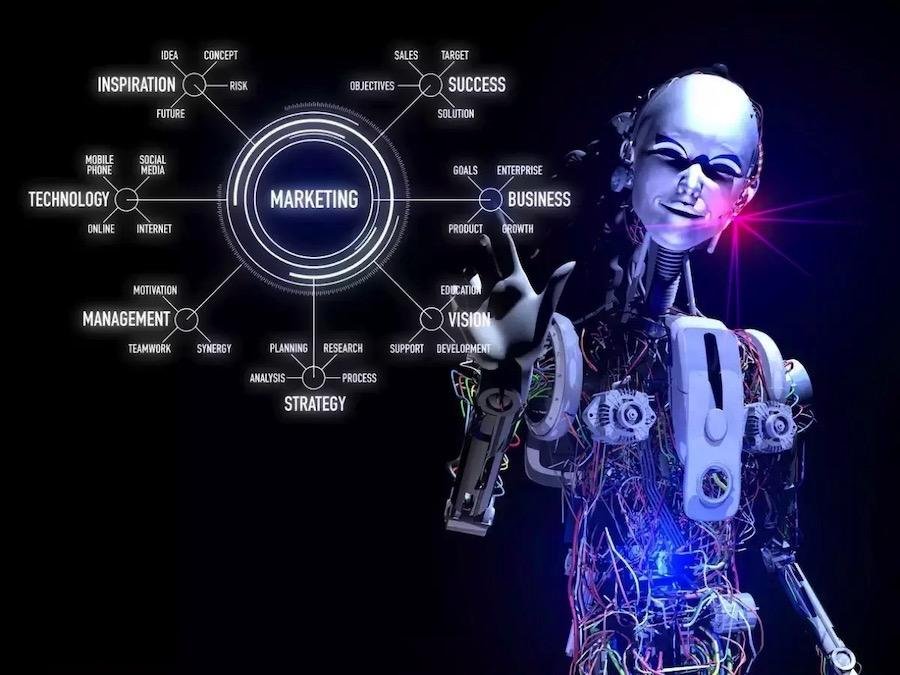
Index
- Basic concepts of artificial intelligence applied to digital marketing.
- Key tools and technologies for integrating artificial intelligence into advertising campaigns
- Benefits and challenges of using artificial intelligence in audience targeting
- Practical examples and recommendations for optimizing ads using artificial intelligence
- Ethical considerations and best practices in the use of artificial intelligence in advertising
- Frequently Asked Questions
- To conclude
Basic concepts of artificial intelligence applied to digital marketing.
Artificial intelligence (AI) refers to computer systems that mimic certain human cognitive abilities, such as learning, reasoning and decision-making. In digital marketing, these capabilities make it possible to analyze large volumes of data to optimize campaigns, segment audiences and personalize content automatically according to user behavior.
Some practical applications of AI in your digital strategy may include:
- Predictive segmentation: anticipate which products or services will interest each user based on their previous browsing habits.
- Intelligent chatbots: offer instant and personalized customer service, available 24 hours a day.
- Advertising automation: automatically adjust bids, audiences and messages on platforms such as Facebook Ads or Google Ads to improve return on investment (ROI).
Understanding these basic concepts will allow you to take full advantage of AI-powered tools, increasing the effectiveness and profitability of your online advertising actions without the need for advanced technical knowledge.
Key tools and technologies for integrating artificial intelligence into advertising campaigns
To make the most of artificial intelligence in your advertising campaigns, it is essential to have the right tools. Platforms such as Google Ads and Meta Ads (Facebook and Instagram) already integrate advanced algorithms that analyze data and automatically adjust your ads to achieve better results. These solutions allow you to accurately segment audiences, optimize budgets in real time and generate dynamic ads tailored to each user.
There are also specific tools that can complement your campaigns:
- Adext AI: automates ad targeting and optimization with machine learning.
- Revealbot: facilitates the automation of customized rules and intelligent budget management.
- Phrasee: uses artificial intelligence to generate persuasive and effective advertising copy.
If you are also looking to improve the design and creativity of your ads, consider technologies such as Canva with AI, which helps create attractive images quickly and easily, or Synthesia, which generates promotional videos using virtual avatars powered by artificial intelligence. This way, without the need for advanced technical knowledge, you can achieve professional results and increase the effectiveness of your advertising campaigns.
Benefits and challenges of using artificial intelligence in audience targeting
By incorporating artificial intelligence in ad targeting, you gain clear advantages such as more effective campaigns, reduced acquisition costs and a deep understanding of your potential customers’ interests and behaviors. AI-based tools allow you to:
- Personalize content: Display targeted ads tailored to browsing history and purchase patterns.
- Optimize budgets: Direct your resources toward segments that actually convert.
- Automate processes: Streamline decision making and save time in repetitive tasks.
However, you will also face certain challenges in implementation. You will have to learn how to correctly interpret the data generated by these tools to avoid incorrect or biased conclusions. In addition, it is essential that you responsibly manage the privacy and security of users’ personal data.
| Benefits | Challenges |
|---|---|
| Accurate segmentation | Interpretation of complex data |
| Advertising cost reduction | Ethical privacy management |
| Automation of repetitive tasks | Technological dependence |
To take full advantage of these benefits and overcome the challenges, it is key that you invest time in training and understanding how these technologies work. You don’t need to be an expert in programming, but you do need to develop analytical skills to make sound data-driven decisions.
Practical examples and recommendations for optimizing ads using artificial intelligence
Artificial intelligence can help you optimize your ads quickly, allowing you to get better results with less effort. For example, platforms like Meta Ads and Google Ads have AI-powered tools that automatically adjust your campaigns based on user behavior. Some practical and effective tactics are:
- Automatic audience targeting: AI identifies audience segments most likely to interact with your ad and tailors campaigns to maximize conversions.
- Text and image creation with AI: Tools such as ChatGPT or Midjourney generate creative ad variations, facilitating fast and efficient testing.
- Predictive analytics: Use solutions such as Google Analytics 4 to predict future trends and adjust your advertising strategies in advance.
To get the most out of these tools, I recommend starting with small budgets to test different ad versions and then scale those that perform best. Also, regularly monitor performance through key metrics such as CTR, CPA or ROAS, and intervene manually when necessary to ensure results aligned with your objectives.
| AI Tool | Main function | Example of practical use |
|---|---|---|
| Meta Advantage+ | Automatic targeting | Find profitable audiences |
| ChatGPT | Text generation | Create powerful titles |
| Google Analytics 4 | Predictive Analytics | Predicting trends and conversions |
Ethical considerations and best practices in the use of artificial intelligence in advertising
When integrating artificial intelligence into your advertising campaigns, you must always make sure to respect the privacy and personal data of your users. Transparency is key: clearly inform when and how you use AI algorithms to personalize ads or analyze behaviors. This will not only help you comply with regulations such as GDPR, but will also strengthen trust and credibility with your audience.
In addition, avoid bias or discrimination in your AI-generated ads. To do so, regularly review the criteria you use to segment target audiences and continuously optimize algorithms to prevent certain audiences from being unfairly excluded. Some best practices you can implement are:
- Transparency: Openly communicate the use of AI in your advertising campaigns.
- Privacy: Protects and adequately manages the personal data obtained.
- Fairness: Ensure that algorithms are inclusive and fair to all segments of your audience.
- Accountability: Regularly monitor performance and possible biases in your IA systems.
Frequently Asked Questions
What exactly is artificial intelligence applied to advertising?
Artificial intelligence (AI) applied to advertising is the use of advanced technologies that enable advertisers to analyze large volumes of data, automate business processes and optimize advertising campaigns. This technology helps to improve ad targeting, personalize messages and predict consumer behavior.
How can AI help you improve your advertising campaigns?
AI can help you better understand your audience by analyzing behavioral data, tastes and buying patterns. By knowing your target audience better, you can create more effective and personalized campaigns, increasing the likelihood of conversion and loyalty.
What artificial intelligence techniques are most commonly used in advertising?
Among the most common techniques are machine learning, predictive analytics, natural language processing (NLP) and artificial vision. These technologies make it possible to automate the creation of advertising content, anticipate trends and personalize the message for each user.
Can artificial intelligence completely replace human labor in advertising?
No, AI is not a complete replacement for marketing and advertising professionals. While it automates repetitive tasks and analyzes data very quickly, creativity, intuition and empathy are fundamental human qualities to build impactful messages and establish emotional connections with audiences.
What are the main benefits of applying artificial intelligence in your advertising campaigns?
The use of AI in advertising facilitates precise targeting, content personalization, real-time optimization and cost reduction. It also improves return on investment (ROI) by directing advertising efforts to more responsive and relevant audiences.
Is it complicated to implement artificial intelligence in small or local businesses?
Today, there are accessible and affordable tools that allow small businesses to incorporate artificial intelligence solutions into their campaigns. Advertising platforms such as Google Ads or Facebook Ads already integrate AI to facilitate the creation of effective and personalized ads, thus simplifying their implementation.
Are there any risks or drawbacks to using artificial intelligence in advertising?
Yes, there are certain risks, such as lack of transparency in some algorithms or possible biases in the data used. It is important to maintain ethical and rigorous control over these technologies and constantly verify that the decisions made by AI are fair and beneficial to your target audience.
How can I start using artificial intelligence in my advertising strategy?
To start, clearly identify your advertising objectives and explore digital tools that already incorporate AI, such as digital ad platforms or predictive analytics software. You can start with small-scale tests and gradually increase their use, always measuring results to optimize campaigns.
To conclude
Now that you know the basics about how artificial intelligence is revolutionizing the world of advertising, you have before you a great opportunity to boost your business or digital project.
Remember that you don’t need to be a technology expert to take advantage of these tools; the essential thing is to keep an open mind and be willing to explore new strategies.
Start small, experiment with different platforms and analyze the results to continuously optimize your campaigns.
In future articles we will delve into specific techniques and case studies that will help you successfully integrate AI into your advertising strategy.
Stay tuned, because this is just the beginning of your journey to smart advertising!