Augmented reality (AR) is no longer a futuristic technology but a practical tool that you can incorporate into your sales strategy today. Companies of all sizes and industries are already taking advantage of this innovation to differentiate themselves, capture customer attention and significantly increase revenue.
If you don’t yet know how to integrate AR into your business, you are missing a valuable opportunity to improve the user experience and optimize the results of your commercial actions. In this article you will discover concrete and accessible ways to use augmented reality to boost your sales, even if you have no prior technical knowledge. 
Index
- Integration of augmented reality into the sales process
- Practical applications of augmented reality to enhance customer experience
- Key tips for implementing AR technology in small and medium-sized companies
- Measurable benefits of using augmented reality in commercial strategies
- Common mistakes when incorporating augmented reality and how to avoid them
- Frequently Asked Questions
- Summary
Integration of augmented reality into the sales process
Incorporating this technology in your commercial process allows you to show your products in an interactive way, capturing the attention of your customers from the first moment. For example, if you sell furniture, with augmented reality your customers will be able to visualize how that sofa would look in their living room before buying it.
By integrating augmented reality, you manage to reduce customer uncertainty, thus facilitating the purchase decision. Some key benefits you will obtain are:
- Greater interaction: You generate immersive experiences that directly involve the customer.
- Reduced returns: Your customers will be more confident in their purchase by clearly seeing how the product fits into their environment.
- Differentiation from competitors: You will offer an added value that will make you stand out in your sector.
In addition, you can easily integrate this technology at different stages of the sales funnel:
| Funnel Stage | Use of Augmented Reality |
|---|---|
| Awareness | Interactive ads with AR in social networks. |
| Consideration | Virtual product demonstrations on your website. |
| Decision | Interactive preview of the product in the customer’s environment. |
Practical applications of augmented reality to improve customer experience
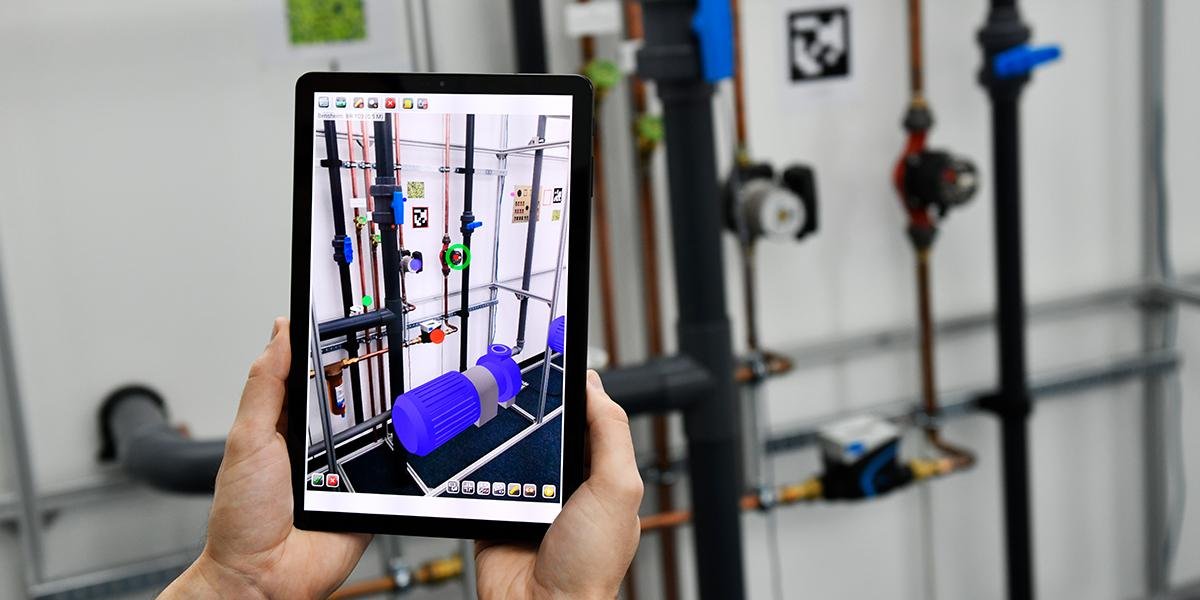
A simple and effective way to integrate augmented reality (AR) into your business is to offer virtual product trials. For example, if you sell furniture or decoration, allow your customers to visualize how a sofa or lamp will look directly in their living room through a mobile application. This reduces doubts, speeds up the purchase decision and minimizes returns.
Another interesting option is to use AR to enhance the experience in physical stores. You can offer additional interactive information by scanning labels or QR codes on products, showing explanatory videos, opinions from other users or practical tutorials. In this way, you add value to the customer and facilitate the buying process.
Some practical ideas that you can easily implement are:
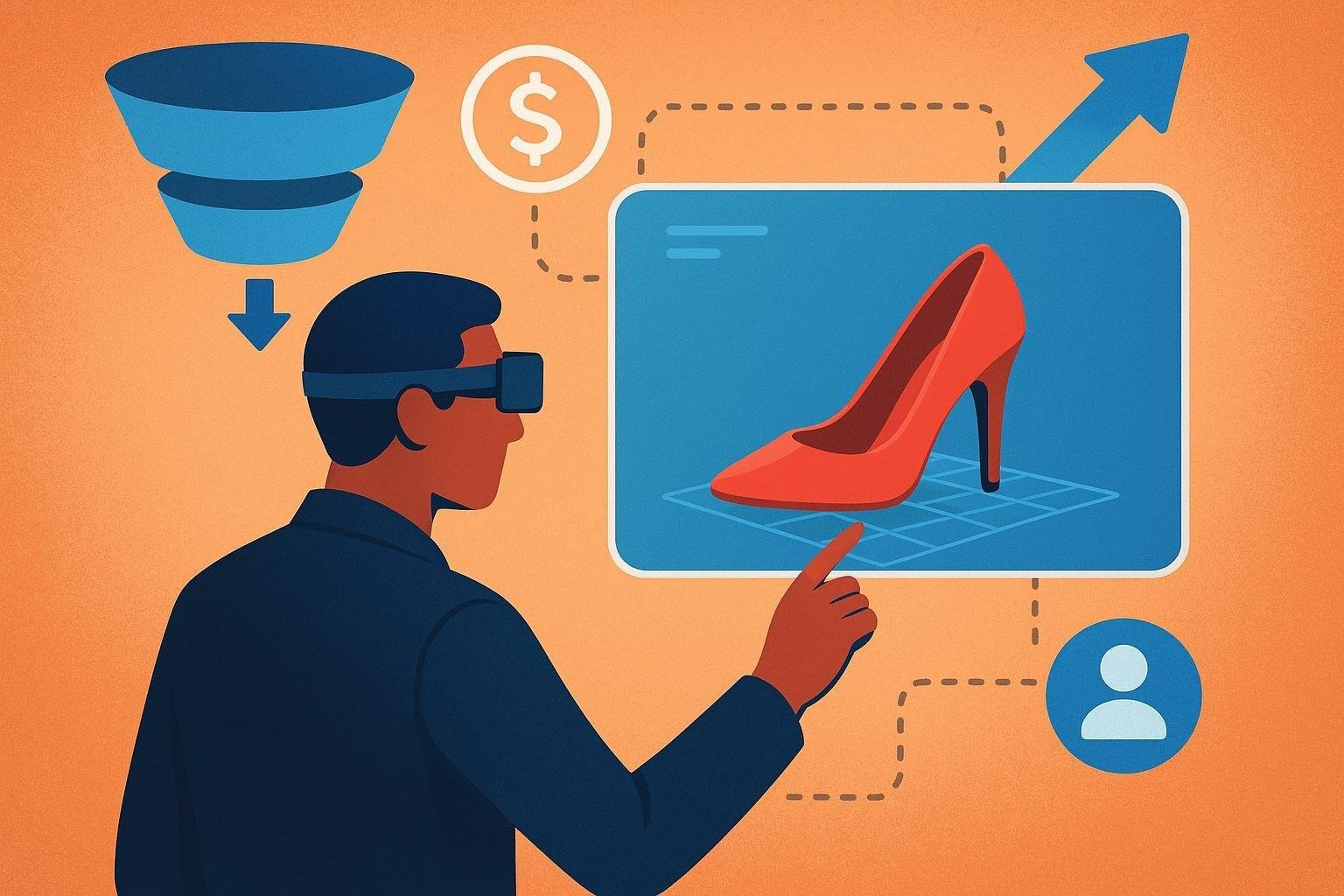
- Fashion and accessories: Try on clothes or accessories virtually to see how they fit before buying them.
- Beauty and cosmetics: Simulates how a makeup or hair color will look in real time.
- Tourism: Uses AR to provide interactive previews of tourist destinations or historical monuments.
Key tips for implementing AR technology in small and medium-sized companies
To start implementing AR technology in your business, it is essential to clearly identify what objectives you want to achieve. If you are looking to improve the customer experience, you could offer interactive demonstrations of products or services. For example, if you have a furniture store, allow your customers to visualize how a sofa would look in their own living room using a simple app.
Also, be sure to select applications or AR solutions that are intuitive and easy for your customers to use. Keep these key aspects in mind:
- Ease of use: Opt for accessible tools that do not require advanced technical knowledge.
- Compatibility: Verify that the AR solution works on mobile devices and common browsers.
- Cost-benefit: Choose affordable options that provide real value, especially when starting with limited budgets.
Finally, measure the results obtained with specific metrics: increase in sales, customer satisfaction or interaction time with the product. This will allow you to clearly evaluate whether the integration of augmented reality contributes to the growth of your business.
Measurable benefits of using augmented reality in commercial strategies
By integrating augmented reality (AR) into your business, you get clear and measurable benefits. First of all, you will notice a significant increase in the interaction and permanence of users on your platform, with rates that usually improve by up to 40% compared to traditional content. In addition, AR facilitates product comprehension, reducing returns due to erroneous expectations by up to 30%.
You will also be able to measure concrete results through key indicators such as:
- Conversion rate: average increase of 20-25%.
- Customer retention: increased customer loyalty by 35%.
- Impact on social networks: 50% increase in organic reach thanks to the virality of interactive content.
You will also have access to accurate data on consumer behavior in real time, allowing you to continuously optimize your commercial strategy and adjust campaigns according to the performance demonstrated by your customers.
Common mistakes when incorporating augmented reality and how to avoid them
When integrating augmented reality (AR) into your strategy, one of the most common mistakes is to saturate the user with unnecessary visual elements. To avoid this, make sure that each element provided by AR is relevant to enhance the customer experience and simplify the buying process. Apply the “less is more” rule and focus on clear and practical functionalities.
Another common mistake is not considering technological compatibility and accessibility. Before investing in AR solutions, investigate whether your customers have compatible devices and the technical capability to use them without difficulty. You can prevent these problems by:
- Pre-testing: perform tests with real users to detect possible technological barriers.
- Cross-platform compatibility: develop experiences compatible with all major operating systems and devices.
- Clarity of instructions: provide simple, easy-to-understand guidelines so that your customers can use AR with confidence.
Finally, avoid underestimating the importance of performance analysis. Monitor key metrics to evaluate the acceptance and effectiveness of your AR initiatives. This will allow you to quickly correct failures and continually optimize your strategy.
Frequently Asked Questions
What is augmented reality and how can it benefit my sales strategy?
Augmented reality (AR) is a technology that allows you to integrate digital elements into the real environment through devices such as smartphones or tablets. Its incorporation into your sales strategy can generate interactive experiences that attract the customer’s attention, facilitate decision-making and increase confidence in the purchase.
How can augmented reality help me improve my customers’ experience?
AR offers the possibility to show your products in a more realistic and detailed way, allowing the customer to interact with them before making a purchase. For example, they can visualize how a piece of furniture would look in their living room or how a certain garment would fit them. This improves their shopping experience and reduces uncertainty.
What do I need to implement augmented reality in my business?
To use AR you will need a specific application or platform to integrate this technology into your strategy. There are simple and affordable tools to start with, as well as more complex options customized to your business needs. In addition, you will need to have digital content adapted to this technology, such as 3D models of your products.
Which sectors can benefit most from the use of augmented reality in their sales?
Augmented reality is especially useful in sectors such as fashion, furniture, decoration, automotive, leisure and tourism. However, it is a versatile technology that can be adapted to different types of business, as long as the goal is to facilitate customer interaction with your product or service before making the purchase.
Is it complicated to develop a commercial campaign with augmented reality?
The complexity depends on the type of project you want to implement. There are standard solutions, easy to use and at affordable costs, ideal to start experimenting with this technology. You can also opt for customized and more sophisticated campaigns that will require more time and budget, but will allow you to clearly differentiate yourself from your competition.
How can I measure the success of a sales strategy based on augmented reality?
You can measure the effectiveness of your strategy through key performance indicators (KPIs) such as conversion rate, customer interaction time with the AR application, user satisfaction level or increase in sales of the promoted product or service. This data will help you assess the real impact of AR on your business.
Summary
Augmented reality is not just a passing trend, but a powerful tool that can transform your sales strategy, clearly differentiating you from the competition.
By starting now, you can stay ahead of the pack and offer unique experiences that increase your customers’ trust and loyalty.
Remember that you do not need great technical knowledge to get started with this technology; there are intuitive and accessible tools that greatly simplify the process.
The important thing is that you are aware of how this innovation fits into your business, that you experiment and measure results, and above all that you put the customer at the center of the experience.
Ready to take the leap into the future of digital sales? Augmented reality is here to stay, and you can be a pioneer in making the most of it.