If you are thinking of taking your business to the digital world or have already taken the first steps, a competitive analysis is essential to understand your market and position yourself strategically. Knowing how your online competitors operate will allow you to discover opportunities, anticipate potential threats and better define your value proposition.
In this article you will learn step by step how to identify who your main competitors are on the Internet, evaluate their strengths and weaknesses, and extract key information that will help you stand out from them. You don’t need advanced technical knowledge, you just need to be clear about what aspects to look at to make the most of this valuable strategic tool. 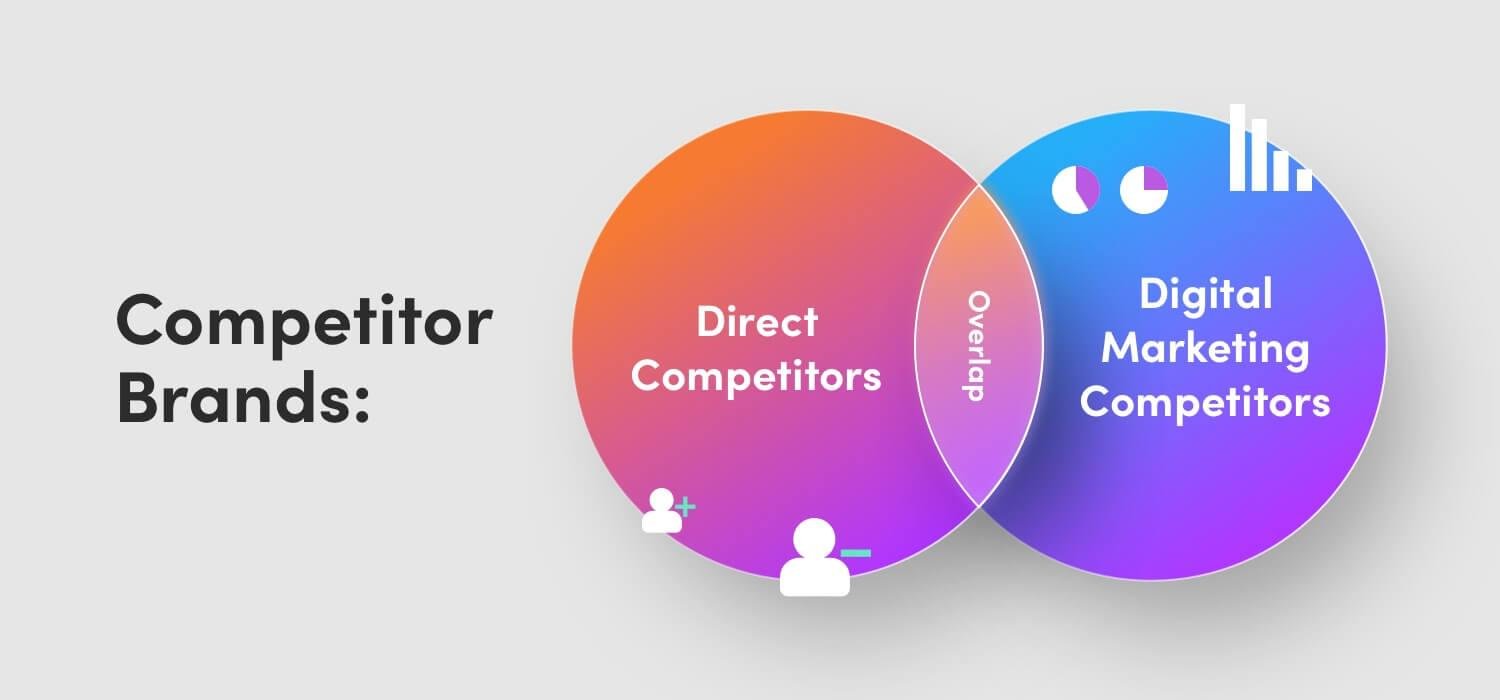
Index
- Effective identification and selection of your digital competitors
- Evaluation and comparison of content strategies and presence in social networks
- Essential digital tools to monitor the competition
- SEO positioning and keyword analysis to uncover strategic opportunities
- Interpretation of data and preparation of a practical report of the competitive analysis.
- Frequently Asked Questions
- Conclusions
Effective identification and selection of your digital competitors
Before you start competing in the digital world, you need to know exactly who your direct and indirect competitors are. Start by performing Google searches with keywords related to your business and identify those websites, blogs and online stores that occupy the top positions. Free tools such as Google Trends, SimilarWeb or Ubersuggest will allow you to easily discover who dominates your niche and what strategies they are using.
Once you have an initial list, focus on selecting the most relevant competitors, evaluating criteria such as:
- Online presence: frequency of publications and quality of content.
- Authority and traffic: estimated volume of visitors, backlinks received and followers in social networks.
- Value proposition: what products or services they offer, prices and outstanding promotions.
You can organize this information in a simple table for quick visual analysis:
| Competitor | Web authority | Social presence | Core Strategy |
|---|---|---|---|
| Brand X | High | Media | Content Marketing |
| Company Y | Media | High | Advertising in social networks |
| Business Z | Low | Baja | Low prices and promotions |
With this clear and visual analysis, you will be able to quickly identify opportunities and weaknesses in your industry to effectively differentiate yourself.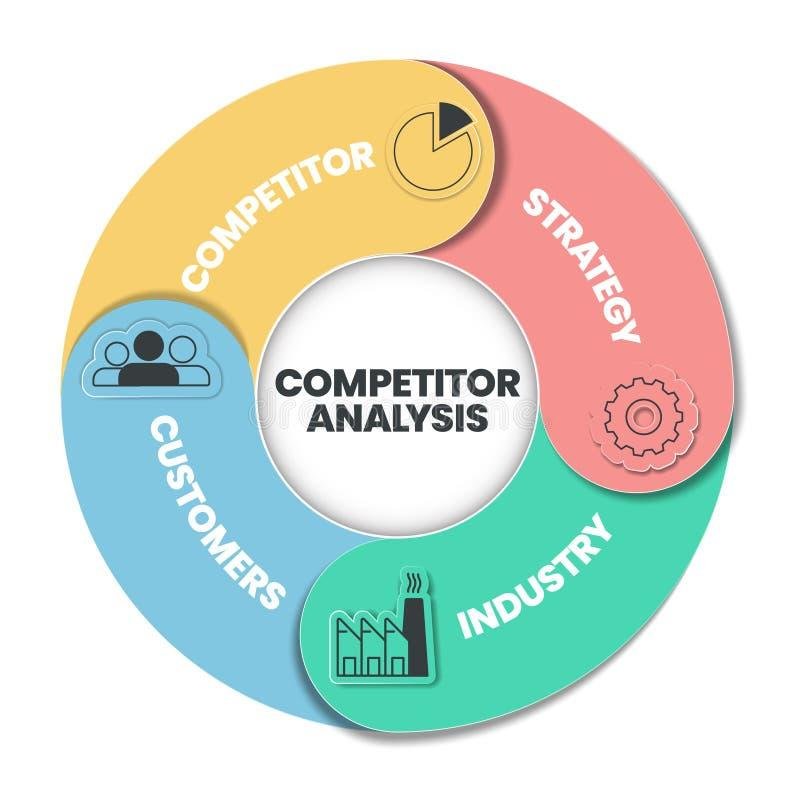
Evaluation and comparison of content strategies and presence in social networks
To evaluate and compare your competitors’ content strategies, you must first identify the social channels where they have an active presence (Instagram, Facebook, LinkedIn, TikTok, YouTube, etc.). Perform a visual and quantitative analysis of their most frequent publications and formats, observing aspects such as:
- Themes and types of content: educational, promotional, inspirational or entertainment.
- Frequency of publication: how many times they publish per week.
- Level of interaction: average number of likes, comments and shares.
- Use of visual formats: short videos, infographics, static images, carousels, etc.
Once you have gathered this information, create a simple comparison table to clearly visualize the differences and similarities with your own current strategy. Here is a practical example:
| Aspect analyzed | Your business | Competitor A | Competitor B |
|---|---|---|---|
| Weekly frequency | 3 publications | 5 publications | 4 publications |
| Preferred format | Static images | Short videos | Carousels |
| Average interaction per post | 150 | 320 | 210 |
With this comparison you will be able to quickly detect areas of improvement and opportunities for differentiation that will help you boost your online presence and better connect with your target audience.
Essential digital tools to monitor the competition
To take your competitive analysis to the highest level, you must have specific digital tools that provide accurate and up-to-date information. These tools are easy to use even if you have no previous technical experience, and allow you to efficiently monitor your competitors’ online activities.
Some essential tools you can start using today:
- SEMrush: ideal for analyzing keywords, web traffic, backlinks and paid ads of your competitors.
- SimilarWeb: provides you with detailed data on traffic sources, audience and performance of any web page.
- BuzzSumo: perfect for finding out which of your competitors’ content has the greatest impact and virality in social networks.
- Ahrefs: excellent for analyzing inbound links, SEO strategies and SEO performance.
In addition, you can complement these tools with a simple comparison table to visualize their main functions:
| Tool | SEO Analysis | Traffic Analysis | Social Media | Ad Analysis |
|---|---|---|---|---|
| SEMrush | Yes | Yes | No | Yes |
| SimilarWeb | No | Yes | No | No |
| BuzzSumo | No | No | Yes | No |
| Ahrefs | Yes | Yes | No | No |
SEO positioning and keyword analysis to uncover strategic opportunities
To identify strategic opportunities through SEO, you first need to understand how your direct competitors are ranking. Start by selecting the top keywords related to your niche and use tools such as SEMRush, Ahrefs or Google Ads Keyword Planner to analyze search volume and ranking difficulty.
Once you have this data, create a simple table that allows you to easily compare your website with those of your competitors:
| Keyword | Your position | Competitor 1 | Competitor 2 | Monthly searches |
|---|---|---|---|---|
| running shoes | 12 | 3 | 5 | 33.000 |
| best sunglasses | 15 | 7 | 2 | 18.500 |
| online yoga course | 9 | 2 | 4 | 12.000 |
This visual comparison will help you to easily detect where you have room for improvement. Prioritize keywords with high search volume and lower positions than your competitors, as this is where you have the most potential for growth.
Interpretation of data and preparation of a practical report of the competitive analysis.
Once you have collected key data on your competitors, it’s time to interpret it and turn it into actionable information. To do this, start by organizing the information into clear categories such as
For example, you could organize your findings in a simple table like this one:
| Competitor | Strengths | Weaknesses | Opportunities for you |
|---|---|---|---|
| Brand A | High visibility in social networks | Little variety of products | Offer greater variety and specialization |
| Brand B | Competitive pricing | Slow customer service | Improve customer service and support |
Finally, prepare a brief, practical report that clearly summarizes your findings. This report should include specific recommendations on what actions to take, strategies to implement and concrete areas where you can outperform your competitors. In this way, you will be able to make quick and effective strategic decisions to boost your digital business.
Frequently Asked Questions
Question: What exactly is a competitive analysis in the digital environment?
Answer: A competitive analysis in the digital environment is a systematic process by which you identify, evaluate and understand the online strategy of your direct and indirect competitors. It includes analyzing aspects such as their websites, social networks, search engine positioning, online advertising and digital content.
Question: Why is it important to conduct a digital competence analysis?
Answer: Because it allows you to detect opportunities and threats in your sector, identify good practices that you can adopt, know your target audience better and clearly differentiate yourself from other players in the market.
Question: What steps should you follow to perform an effective digital analysis of your competitors?
Answer: First, identify who your direct and indirect competitors are. Second, analyze their websites to evaluate design, content and user experience. Then, look at their social media profiles to learn about their interaction with the public. Also, review their search engine optimization (SEO) and online advertising strategies (SEM). Finally, gather all this information in a clear report that will help you define your own digital strategy.
Question: What tools can you use to analyze your competitors in the digital arena?
Answer: There are different free and paid tools to perform this analysis. Some outstanding ones are Google Analytics and Google Trends to analyze trends and traffic; SEMrush or Ahrefs to evaluate SEO and SEM; and BuzzSumo or Socialbakers to measure presence and activity in social networks.
Question: How often is it convenient to perform a digital analysis of the competition?
Answer: Ideally, you should perform this analysis on a regular basis, for example, quarterly or semi-annually, depending on the dynamics of your industry. In addition, it is important to keep a constant watch on your closest competitors to quickly detect significant changes in their digital strategies.
Question: Once the analysis is finished, what can you do with the information obtained?
Answer: With this information you can improve your own digital strategy, applying successful practices observed, avoiding mistakes you detected in your competitors and looking for opportunities to differentiate yourself and stand out in your market.
Conclusions
Now that you know how to perform a competitive analysis in the digital environment, you have in your hands a key tool to stand out in the online market. By applying these steps constantly and strategically, you will be able to anticipate trends, discover new opportunities and differentiate yourself effectively.
Remember that analyzing your competitors does not imply copying their strategies, but better understanding the digital ecosystem to make informed decisions. Always keep your analysis updated and adapt your strategy according to the real needs of your audience and market movements.
If you have any doubts or need to deepen in any specific aspect, leave me a comment below and I will be happy to help you. Much success in your digital project!