If you want to differentiate yourself from your competition and increase customer loyalty, gamification is a powerful strategy to consider. It consists of applying game-like dynamics to your business, allowing your customers to interact with you in a fun, attractive and motivating way.
By implementing gamification, you will not only capture the attention of your users, but you will also be able to increase their satisfaction and engagement in the long term. In this article you will learn how to easily apply this technique in your online business, even if you have no previous experience in digital marketing or programming. 
Index
- What is gamification and how does it improve customer loyalty?
- Keys to designing an effective gamification strategy for your business
- Practical examples of gamification that increase consumer loyalty
- Common mistakes when implementing gamification and how to avoid them
- How to measure the success of your gamification strategy in customer retention
- Frequently Asked Questions
- Summary
What is gamification and how does it improve customer loyalty?
Gamification consists of applying game mechanics to business contexts to capture the interest of your customers and keep them motivated. By turning the interaction with your business into an entertaining experience, you get your customers to participate more actively and increase their emotional commitment to your brand.
Some effective gamification techniques you can use include:
- Points and rewards systems: Reward loyalty with exclusive discounts or gifts.
- Levels and achievements: Create different levels that customers can reach when making purchases or performing specific actions.
- Contests and challenges: Generate healthy competitions where participants get recognition and special rewards.
Implementing these strategies will help you create a deeper connection with your customers, encouraging them to choose you over your competitors and recommend your business to others.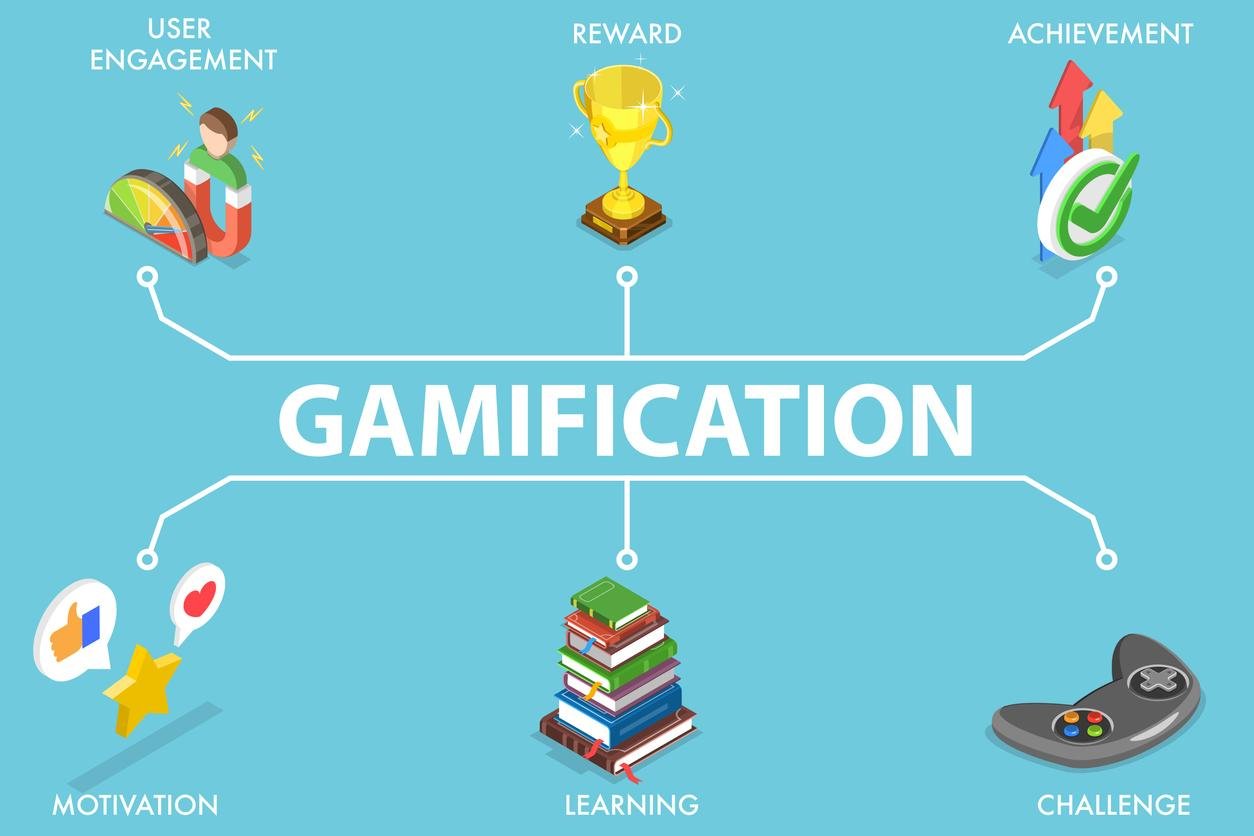
Keys to designing an effective gamification strategy for your business
For gamification to produce tangible results in your business, it is essential that you clearly define the objectives you want to achieve with it: are you looking to increase sales, improve loyalty or encourage interaction on social networks? Once you are clear on this point, you will be able to better choose the mechanics and dynamics that you will apply in your campaigns.
It is also important to know your ideal customer well: their motivations, interests and behaviors. This way, you can design a gaming experience tailored to their tastes and preferences, making sure that participation is engaging and meaningful to them.
Some practical keys to design your strategy may be:
- Simplicity: clear and easy to understand rules.
- Relevant rewards: attractive prizes that provide real value.
- Constant feedback: immediate feedback that motivates to continue.
- Healthy competition: visible rankings or scorecards.
| Game mechanics | Recommended objective | Practical example |
|---|---|---|
| Cumulative points | Encourage recurring purchases | Points program for each euro spent |
| Virtual badges | Stimulate interaction in networks | Badge for sharing branded content |
| Challenges | Increase active participation | Weekly challenge with exclusive prize |
Practical examples of gamification that increase customer loyalty
A practical example is points programs, where you get rewards for specific actions, such as recurring purchases, product reviews or sharing content on social networks. Platforms such as Starbucks or Sephora use point systems that you can accumulate and redeem for discounts, exclusive products or unique experiences.
Another effective strategy is the use of badges and levels that you unlock as you interact with the brand. Duolingo, for example, uses badges for consecutive days of learning, while Nike Run Club offers levels based on distance traveled, which encourages engagement and fosters healthy competition.
You can also use interactive games or sweepstakes on social networks. For example, organizing periodic sweepstakes on Instagram or Facebook where you participate by answering trivia, tagging friends or sharing photos, allows you to have fun while strengthening your bond with the brand.
- Points programs: Starbucks, Sephora
- Badges and levels: Duolingo, Nike Run Club
- Games and sweepstakes: Contests on Instagram or Facebook
| Strategy | Example | Principal Benefit |
|---|---|---|
| Starbucks Rewards Points Program | Starbucks Rewards | Encourages repeat purchases |
| Badges and levels | Nike Run Club | Increased interaction |
| Interactive sweepstakes | Contests on Instagram | Improve brand visibility |
Common mistakes when implementing gamification and how to avoid them
When implementing gamification in your business strategy, it is easy to fall into certain common mistakes that can negatively affect the user experience and limit results. One of them is to
Another common mistake is not knowing your audience well. Before planning any dynamic, be sure to research what really motivates your customers. Avoid using irrelevant rewards or prizes that do not connect emotionally with them. To prevent these mistakes, keep in mind:
- Define clear and realistic objectives from the beginning.
- It adopts simple and easy to understand mechanics.
- Customize incentives according to the preferences of your audience.
- Regularly measure impact and adjust your strategy as you go along.
Remember that an effective implementation of gamification should bring real value to your customers, improving their experience and generating greater loyalty to your brand.
How to measure the success of your gamification strategy in customer retention
To evaluate whether your strategy is working well, you should analyze certain key performance indicators (KPIs) that reflect the engagement and loyalty of your customers. Some essential metrics you can use are:
- Participation rate: Percentage of active customers in your gamified platform.
- Interaction frequency: How many times your customers interact with the game or platform in a given period.
- Retention rate: Percentage of customers who continue to use your service after implementing gamification.
- Net Promoter Score (NPS): Level of satisfaction and recommendation by your customers.
You can record this data monthly in a simple table to clearly visualize the evolution of your strategy:
| Metrics | January | February | March |
|---|---|---|---|
| Participation rate (%) | 35% | 42% | 50% |
| Frequency of interaction (per user) | 4 times | 6 times | 7 times |
| Retention rate (%) | 68% | 72% | 78% |
| NPS | 65 | 72 | 80 |
If you see a steady increase in these metrics, you will know that your gamification strategy is generating positive results. On the other hand, if any metric stagnates or decreases, it will be time to review your approach and adjust it according to the interests and needs of your customers.
Frequently Asked Questions
What exactly is gamification applied to customer loyalty?
Gamification consists of applying game elements, such as prizes, challenges or rankings, in contexts that are not entertainment, such as the relationship with your customers. The objective is to motivate them and increase their interaction with your brand, thus generating loyalty and commitment.
How can gamification benefit you to build customer loyalty?
Applying gamification strategies allows you to increase the interest and participation of your customers, creating positive and fun experiences. This helps to strengthen the relationship with them, increasing retention, motivating repeat purchases and improving your brand image.
In which areas of your business can you use gamification?
You can use gamification in different areas such as loyalty programs, purchasing processes, customer service, marketing campaigns or even on your website and social networks. In this way, you turn the usual interaction into a more entertaining and attractive experience for your customers.
What specific elements can you use to gamify your customers’ experience?
There are many useful elements to apply gamification: rewards, accumulable points, rankings that generate healthy competition, badges or achievements that recognize the loyalty of your customers and challenges or missions that allow them to show their commitment.
What aspects should you take into account before applying gamification in your loyalty strategy?
First you must know your customers and their preferences well in order to choose attractive and relevant dynamics for them. Also, make sure that the rules are clear and simple, that there is a defined purpose and that the experience is consistent with the values and objectives of your brand.
How can you measure the effectiveness of a gamification strategy?
You can measure the results by observing key indicators such as the number of recurring customers, purchase frequency, time spent interacting with your brand, their degree of participation or the increase in recommendations and positive reviews. This data will help you evaluate whether gamification is successfully meeting its objective.
Summary
Now that you know how gamification can help you build customer loyalty, it’s time to implement these strategies in your own business.
Remember that the important thing is to create a fun, attractive and memorable experience for your users, thus generating an emotional connection that lasts over time.
Don’t forget to measure and analyze the results of your actions to continuously optimize your initiatives and obtain the maximum benefit.
Are you ready to take your business to the next level with gamification? It’s time to play and win your customers’ loyalty!