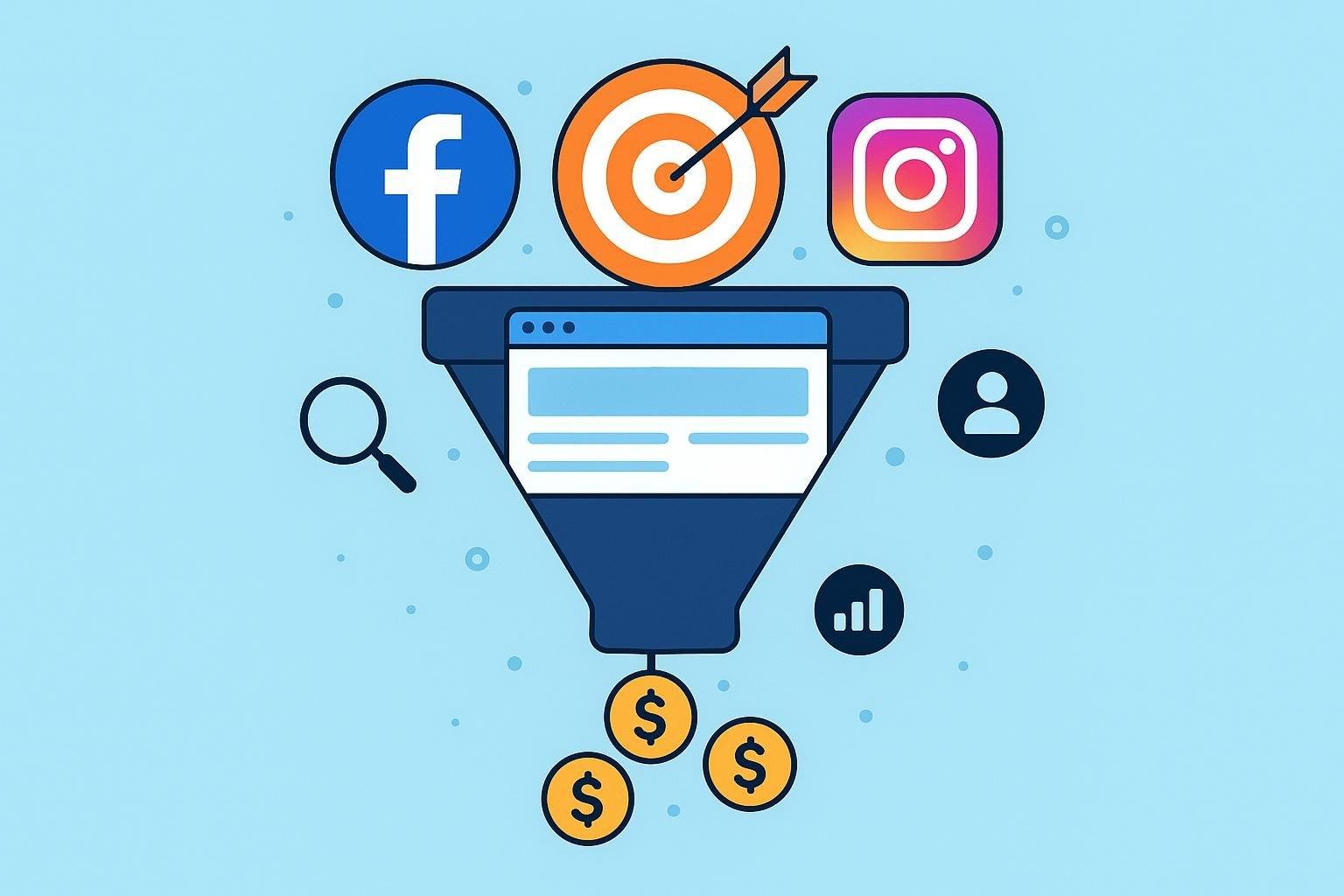
If you are investing money in Facebook and Instagram ads, but you feel you are not reaching the right audience, you probably have a targeting problem. To maximize your budget and increase the effectiveness of your campaigns, it is essential to understand how to reach the right user at the right time.
In this article you will discover the fundamental keys to correctly target your advertising on Facebook and Instagram, even if you have never set up an advertising campaign before. You will learn basic concepts and practical techniques that will allow you to improve the accuracy of your ads, increase the return on your investment and attract potential customers really interested in what you offer. 
Index
- Clearly define your objectives to optimize segmentation
- Interest-based segmentation: how to make the most of audience preferences
- How to use demographic and geographic data effectively
- Behavioral segmentation: keys to identify users according to their habits
- Constant fine-tuning and optimization: analysis and continuous improvement of results
- Frequently Asked Questions
- In a nutshell
Clearly define your objectives to optimize segmentation
Before launching any campaign, it is essential that you are clear about your specific objectives. Facebook and Instagram offer you different options depending on what you want to achieve, so clearly defining your goals will help you choose the right type of campaign and optimize your budget.
To make this task easier for you, think about your objectives by considering these categories:
- Recognition: Give visibility to your brand, product or service.
- Consideration: Generate traffic, interaction or capture potential customers.
- Conversion: Achieve sales, registrations or specific actions on your website.
For example, if your goal is to grow your database of potential customers, you should choose lead generation campaigns, setting up specific forms to get relevant information. If, on the other hand, you want to increase the direct sales of your online store, conversion-oriented campaigns will be your best option. 
Interest-based segmentation: how to make the most of audience preferences
Knowing the specific interests of your audience is essential to optimize your campaigns on Facebook and Instagram. These platforms collect a wealth of information about users’ preferences and behaviors, allowing you to create highly personalized ads.
To make the most of interest-based targeting, start by clearly identifying your ideal customer and think about what topics, brands or activities they might be interested in. For example, if you sell online vegan cooking courses, you can target people interested in healthy nutrition, vegetarian recipes or organic brands.
Some key recommendations for segmenting by interest are:
- Combines specific and general interests: mixes broad interests (e.g., wellness) with more specific interests (yoga, meditation).
- Continuously analyze and adjust: regularly review the results of your campaigns to identify which interests generate the best results and optimize your targeting.
- Use the exclusion function: exclude interests that may attract irrelevant audiences, thus optimizing your advertising spend.
How to use demographic and geographic data effectively
The key to making the most of demographic data is to clearly define the profile of your ideal customer. Segment your ads according to specific characteristics such as age, gender, marital status, education level or interests. For example, if you sell sports products for young women, set up your campaign to exclusively target women between the ages of 18 and 30 who are interested in fitness, running or yoga.
Geographic targeting is equally decisive, especially if your business has a physical presence or if you offer specific services in certain regions. Use segmentation to:
- Locate nearby customers: Launch specific promotional campaigns for users located within a certain radius of action around your physical business.
- Adjust messages according to location: Modify language, currency or promotions according to the user’s country or city.
- Segment by local behavior: Take advantage of regional events or local holidays to create personalized offers.
In addition, combine both segmentations to further increase the effectiveness of your campaigns. For example, if you sell online courses for entrepreneurs, you could set up differentiated campaigns according to country, adapting the offer to each culture or socioeconomic level.
Behavioral segmentation: keys to identify users according to their habits
The key to effectively impact your target audience is to analyze how they interact with your brand and their online habits. Facebook and Instagram allow you to segment users according to their behavior, offering you advanced options to optimize each campaign.
Some of the most important options for behavioral targeting are:
- Purchase history: Target users who have recently made online purchases or who show interest in products similar to yours.
- Interaction with your page or content: Segment users who have played your videos, visited your website or interacted with your social networks.
- Devices and connection: Adjust your advertising according to the type of device your users use (smartphone, tablet or computer), type of connection (Wi-Fi or mobile data) or frequency of travel.
To better understand how to target your campaigns based on user behavior, take a look at this practical example:
| Campaign objective | User behavior | Suggested segmentation |
|---|---|---|
| Online course sales | Frequent consumption of educational videos | Users who regularly watch educational videos |
| Sporting goods promotion | Interest in fitness and wellness | Users who follow pages and contents related to sports |
| Increase local restaurant reservations | Frequent interaction with local businesses | Users who frequently visit restaurants in your geographic area |
Leveraging these tools will allow you to launch more relevant ads, reduce costs and significantly improve the return on your advertising investment.
Constant fine-tuning and optimization: analysis and continuous improvement of results
The key to strong results on Facebook and Instagram is to track your campaigns closely. Use the Ads Manager to view key metrics such as reach, frequency, cost-per-click (CPC) and return on ad spend (ROAS). These metrics will allow you to quickly identify what’s working and what’s not, so you can make informed decisions.
Analyze your results on a weekly basis and make small, progressive adjustments to your ads, audiences or budgets. Some important aspects to evaluate are:
- Creatives: try different images, videos and texts to discover what resonates best with your audience.
- Segmentation: modify or expand your audiences according to the performance obtained.
- Targets and formats: experiment with different types of ads (stories, carousel, dynamic ads) to maximize impact.
Adopt an approach based on constant testing (A/B testing), comparing options and validating hypotheses. This methodology will allow you to continuously optimize your campaigns and maximize the return on your advertising investment.
Frequently Asked Questions
What does it mean to segment advertising on Facebook and Instagram?
Advertising targeting consists of showing your ads exclusively to those users who meet certain specific criteria, such as age, location, interests or behaviors. In this way, you manage to reach people who are really interested in your product or service.
Why is it important to correctly target your Facebook and Instagram ads?
Proper segmentation allows you to optimize your advertising budget, increasing the effectiveness of your campaigns by targeting only those who are most likely to interact with your offer. This way, you increase conversions and get a higher return on investment.
What factors should you consider when segmenting your target audience?
You should consider demographics, such as age, gender and location; specific interests related to your product or service; online behaviors, such as previous purchases or interactions with your posts; and connections, such as current followers or people who have already interacted with your page.
How can you identify the right interests for your audience?
To select relevant interests, analyze the characteristics and preferences of your ideal customer. Also use tools such as Facebook Audience Insights, which allow you to know what interests people who already follow your page or interact with similar content have in common.
What are the most common mistakes when targeting ads on these platforms?
Among the most frequent mistakes are making segmentations that are too broad, which decreases the relevance of the ad; using interests that are unrelated to your product; not excluding already converted audiences; and not periodically analyzing the results to adjust the segmentation.
How do you know if your segmentation is working correctly?
To determine if your targeting is effective, you should monitor key metrics such as interaction rate, cost per click (CPC), conversion rate and return on advertising investment (ROAS). If this data is positive and meets your objectives, it is a sign that your targeting is appropriate.
When should you adjust your ad targeting?
It is advisable to adjust your targeting when you notice a decrease in the effectiveness of your ads, when you launch new products or services, or when you notice changes in the behaviors and preferences of your audience. Periodic testing will help you maintain the effectiveness of your campaigns.
In a nutshell
Correctly segmenting your Facebook and Instagram campaigns is one of the most decisive aspects to achieve positive results in your online advertising. By applying these keys, you will be able to connect with relevant audiences, optimize your budget and considerably increase the return on your investment.
Remember that segmentation is an ongoing task; test, measure and adjust regularly to discover what works best for your business. Invest time in getting to know your audience deeply, because the better you understand who your potential customers are, the more effective every euro invested will be.
Now it’s your turn to start putting these keys into practice. Ready to take your digital advertising to the next level?