If you want to attract more visitors to your website and improve your search engine rankings, it is essential that you pay attention to technical SEO. Although it may seem complicated at first, mastering certain basic technical aspects will allow you to optimize your page so that Google and other search engines can find it easily.
In this article, you will discover some practical technical SEO tips to implement quickly on your website, without the need to be an expert in programming. With these recommendations, you will make your digital project more visible, increase its authority and attract constant and quality traffic. 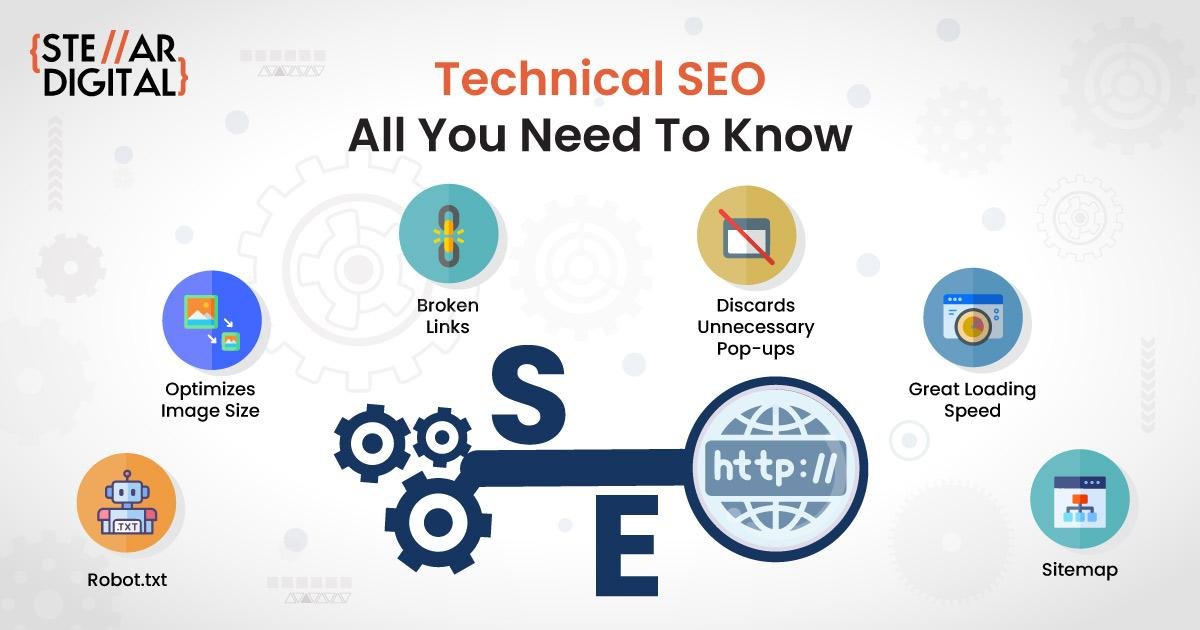
Index
- Optimization of crawling and indexing: how to make search engines’ job easier
- Improve loading speed: keys to optimize your website performance
- The importance of a clear and user-friendly URL structure for technical SEO
- Structured data and rich snippets: take advantage of these tools to increase your visibility
- Mobile optimization: technical recommendations to improve user experience on mobile devices
- Frequently Asked Questions
- Conclusion
Optimization of crawling and indexing: how to make search engines’ job easier
For search engines to explore your website with ease, it is essential to optimize the structure and architecture of the site. Make sure you have a well-configured
Periodically check your site for 404 errors (pages not found) and broken links, which hinder user navigation and negatively affect positioning. To improve this, you can:
- Redirect old URLs via 301 redirects.
- Implement a clear and logical structure with friendly URLs.
- Avoid duplicate content by using canonical tags correctly.
Finally, optimize the loading speed of your website, a key factor for SEO positioning and user experience. Tools such as Google PageSpeed Insights or GTmetrix will help you identify areas for improvement and suggest concrete actions to increase the speed of your page. 
Improve loading speed: keys to optimize your website performance
Loading speed is one of the key factors that rank your website in the top search results. To optimize it, focus on reducing the weight of your images by using compressed formats such as WebP or optimized JPEG, minimize the use of unnecessary scripts and enable Gzip compression from your server.
Also, consider using a caching system that temporarily stores your website’s static files to reduce response time. Some recommended tools are:
- WP Rocket: simple and effective premium plugin for WordPress.
- W3 Total Cache: free alternative with multiple advanced options.
- Cloudflare: CDN service that improves the overall speed of your site.
Remember to periodically evaluate your website’s performance using free tools such as Google PageSpeed Insights or GTmetrix. These tools give you valuable information on what specific aspects you can improve to offer a fast and smooth experience to your visitors.
The importance of a clear and user-friendly URL structure for technical SEO
A clear and user-friendly URL structure makes it easier for both users and search engines to understand the content of your page. By including relevant and descriptive keywords in the URL, you reinforce the thematic context and increase the chances of appearing in search results.
In addition, a well-organized URL improves the user experience, generating trust and increasing the click-through rate (CTR). To achieve this, take into account these practical recommendations:
- Be brief and concise: avoid long and confusing URLs.
- Use hyphens (-): separate words clearly to improve readability.
- Avoid special characters and accents: this prevents possible interpretation errors.
Here is a simple example of how to optimize your URLs:
| Unfriendly URL ❌ | Optimized URL ✅ |
|---|---|
| tupagina.com/?p=123 | tupagina.com/zapatillas-running-ombre |
| tupagina.com/category?id=456 | tupagina.com/sports-accessories |
Structured data and rich snippets: take advantage of these tools to increase your visibility
Structured data are snippets of code that you add to your website to help search engines better understand your content. Thanks to them, Google can display rich snippets, which significantly increase the visibility and CTR (clicks) of your page in search results.
Using rich snippets you can highlight key information such as:
- Ratings: stars and customer reviews.
- Pricing and availability: ideal for e-commerce products.
- Recipes: preparation times and calories.
- Events: dates, places and times.
If you use WordPress, plugins like Yoast SEO, Rank Math or Schema Pro make implementation much easier. Remember to verify your structured data with Google’s rich results testing tool to make sure everything is working properly.
Mobile optimization: technical recommendations to improve user experience on mobile devices
To ensure a smooth and engaging mobile experience, make sure your website is fully responsive. Use tools such as Google PageSpeed Insights to analyze your website’s mobile performance and detect possible technical issues. Also, implement lightweight image formats such as WebP and enable Gzip compression to reduce load times.
Also optimize the readability of mobile content by using clear fonts, adequate font sizes (minimum 16px) and sufficient contrast between text and background. Reduce the use of invasive pop-ups that hinder interaction and generate frustration in mobile users. In summary, prioritize these key recommendations:
- Responsive design: automatically adapts your website to different screen sizes.
- Loading speed: reduces the weight of images and CSS/JS files.
- Easy interaction: large and accessible buttons, short and easy to complete forms.
Here is a practical summary of ideal load times for mobile sites:
| Loading time | User experience | SEO Impact |
|---|---|---|
| Less than 2 sec. | Optimum | High positive |
| 2-3 sec. | Acceptable | Moderate positive |
| More than 3 sec. | Bad | Negative |
Frequently Asked Questions
What exactly is technical SEO and why is it important for your website?
Technical SEO refers to the optimizations you make to the structure and inner workings of your website to make it easier for search engines to crawl, index and correctly understand your content. It is important because a good technical optimization improves the visibility of your website in search engines, thus increasing the possibility of attracting organic and quality traffic.
What are the basic technical aspects that you should optimize on your website?
Among the basic technical aspects you should optimize are loading speed, adaptability to mobile devices, clear and friendly URL structure, robots.txt file, XML sitemaps, correct use of HTML tags such as titles, subtitles and meta descriptions, as well as avoiding broken links and duplicate content.
How does the loading speed of your site affect SEO positioning?
The loading speed of your website is fundamental for SEO positioning, as search engines positively value fast sites that offer a good user experience. A slow page can increase the abandonment rate and reduce dwell time, negatively impacting your organic ranking.
Why is it important to have a responsive design?
A responsive design allows your website to automatically adapt to different screen sizes, such as mobiles, tablets and computers. This is important because search engines, especially Google, favor websites adapted to mobile devices in their results, thus improving the user experience and your SEO ranking.
How can you solve the problem of duplicate content on your site?
To solve duplicate content, you can use canonical tags, 301 redirects for duplicate URLs, or correctly configure parameters within search engines (such as Google Search Console). These practices help to clearly inform search engines which is the original version of the content, avoiding confusion and penalties.
What role do XML sitemap files play in technical SEO?
XML sitemaps help search engines understand the structure of your website and discover new pages faster and more efficiently. By providing a clear and up-to-date map of the pages you want to index, you improve the crawlability and indexing of your content, thus improving your organic ranking.
Why is it advisable to regularly check the robots.txt file?
The robots.txt file tells search engines which pages or resources on your site they can and cannot crawl. Regular review prevents you from accidentally blocking important pages or allowing access to private content. In this way, you ensure that search engines crawl and index exactly what you want to improve your online visibility.
How can you identify and resolve crawling errors on your website?
You can identify crawl errors by using tools like Google Search Console, which gives you detailed information about pages not found (404 errors), indexing problems and other technical issues. By correcting these errors through redirects or repairing internal links, you help search engines crawl your website correctly and improve your organic ranking.
How do friendly URLs influence your SEO ranking?
Friendly URLs are clear, short and descriptive web addresses that clearly indicate the content of the page. This type of URL helps search engines to better understand your content and also facilitates the user experience. As a consequence, it improves the relevance of your website in search results and favors a better SEO positioning.
Conclusion
Now that you know these key tips on technical SEO, it’s time to take action and optimize your website. Remember that improving your SEO requires consistency, analysis and periodic adjustments.
Don’t worry if you find it challenging at first; the important thing is to start and move forward step by step. With each technical improvement you implement, you will be closer to attracting more visitors and generating greater results for your online business.
If you have any questions or need to go deeper in any aspect, feel free to leave a comment or contact me, I’m here to help you succeed in your digital adventure!