If you’re thinking of launching your own online business or looking to boost your current project, you’ve probably heard of automated sales funnels. A sales funnel is a key tool that allows you to capture leads, guide them step-by-step through a predefined process and convert them into repeat buyers with minimal intervention on your part.
In this complete guide you will learn step-by-step how to create an automated sales funnel from scratch, with no prior technical knowledge required. You will discover the essential strategies, the most effective tools and practical tips so you can implement your funnel quickly and start generating tangible results for your business. 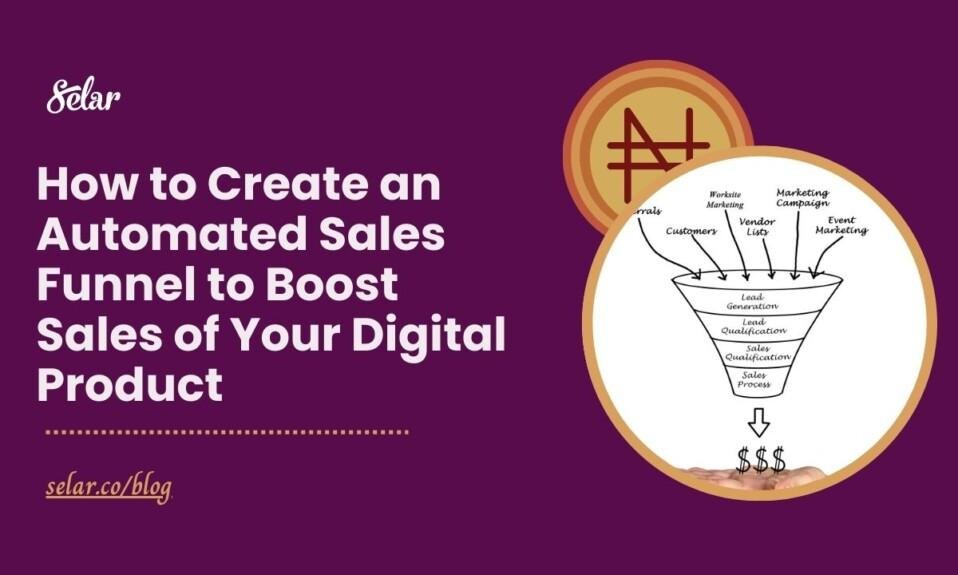
Index
- Key strategies for defining the stages of the automated sales funnel
- Recommended tools to automate each stage of the funnel
- How to optimize content to maximize conversion at every stage
- Essential metrics to evaluate the effectiveness of your automated funnel
- Common mistakes when implementing automated funnels and how to avoid them
- Frequently Asked Questions
- To conclude
Key strategies for defining automated sales funnel stages
Before defining the specific stages, you need to clearly identify your potential customer’s ideal journey. This implies knowing their interests, needs and behaviors at each stage of the buying process. Once this is clear, you will be able to determine precisely which messages to send and which actions to automate at each stage.
An effective strategy is to divide your funnel into three main phases:
- Attraction Phase: Here you capture the attention of visitors with valuable and relevant content, such as blog articles or social media posts.
- Nurturing Phase: In this stage, you use automations to deliver personalized content (emails, ebooks, free webinars) that resolve doubts and increase user confidence.
- Conversion Phase: Finally, you drive the purchase through concrete offers and clear calls to action, such as exclusive discounts or free trials of your product or service.
For each phase, define specific objectives and key metrics that allow you to continuously evaluate and optimize your automated funnel.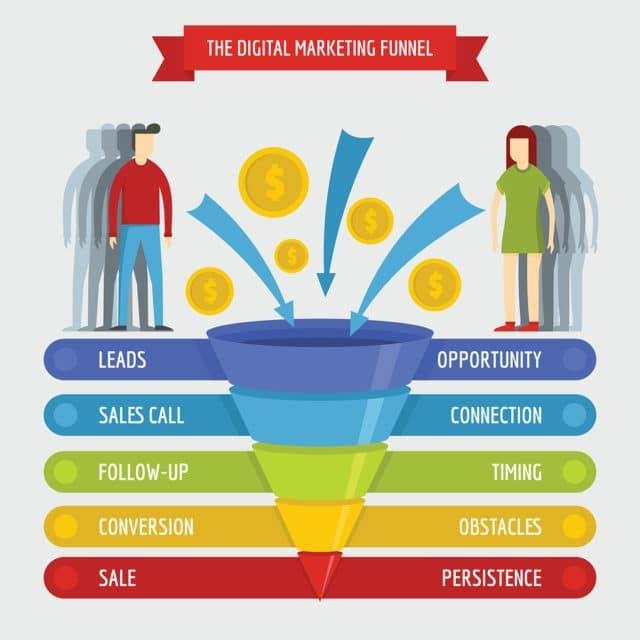
Recommended tools to automate each stage of the funnel
To optimize your sales funnel, you need specific tools for each stage that allow you to automate repetitive tasks and focus on what’s really important: converting visitors into customers. Here is a selection of proven solutions that I recommend depending on the stage of the funnel you are in:
- Engagement (traffic): Use platforms such as Buffer or Metricool to automate your social media posts and drive visitors to your website without having to be online all day.
- Leads: Tools such as ActiveCampaign or Mailchimp allow you to set up automated forms and email sequences to capture leads and keep them interested.
- Conversion (sales): Platforms such as ThriveCart or Hotmart facilitate the automation of digital payments and deliveries, generating seamless and secure sales.
Also, if you’re looking for more accurate automated tracking, consider tools like Zapier, which easily integrates all your apps and automatically moves user information between them. This way, your sales funnel will work for you 24 hours a day, while you focus on growing your business.
How to optimize content to maximize conversion at every stage
Optimizing your content to increase conversion requires a clear understanding of what your potential customer needs at each stage of the funnel. In the initial stage, focus on capturing attention and generating interest with engaging, short and easy-to-consume content. Use formats such as short videos, infographics or quick lists that solve a specific need quickly and effectively.
In the intermediate phase, your goal is to delve deeper into the user’s specific interests and reinforce your credibility. Here you can offer downloadable guides, free webinars or case studies that show concrete benefits. To maximize conversion, be sure to include clear and strategic calls to action that invite them to move up the funnel.
Finally, in the final stage, it is crucial to reduce any friction that may impede conversion. To achieve this, use techniques such as:
- Real testimonials: they generate trust and reinforce the purchase decision.
- Clear guarantees: they offer security to the user and eliminate doubts.
- Limited offers: create urgency and motivate immediate action.
With these specific settings, your content will be perfectly adapted to the user’s needs at each stage, significantly increasing your conversions.
Essential metrics to evaluate the effectiveness of your automated funnel
Once your automated funnel is up and running, you will need to evaluate its performance to know what is working and what you can improve. The following metrics will allow you to clearly measure the effectiveness of your strategy:
- Conversion rate: percentage of visitors who complete the desired action (subscription, purchase, registration).
- Cost per acquisition (CPA): how much money you spend on average to get each new customer.
- Average Order Value (AOV): average amount spent by each customer in your funnel.
- Cart abandonment rate: percentage of users who add products to the cart but do not complete the purchase.
You can visualize this data clearly using a simple table:
| Metrics | Recommended target |
|---|---|
| Conversion rate | > 3 % |
| Cost per acquisition (CPA) | < 25 € |
| Average Order Value (AOV) | > 50 € |
| Cart abandonment rate | < 60 % |
By analyzing these metrics regularly you will be able to optimize your automated funnel, reduce costs, increase conversions and, consequently, increase your revenue.
Common mistakes when implementing automated funnels and how to avoid them
When you are starting out with automated funnels, it is easy to fall into the trap of wanting to make everything too complex from the start. A common mistake is to create very long sequences of emails or to add too many logical conditions without first validating your proposal. To avoid this, start with something simple and clear: define your offer, a single target audience and a short automated sequence of 2 to 4 emails.
Another common failure is not measuring the performance of your funnel correctly or not measuring it frequently enough. If you don’t know what’s working and what’s not, you’ll be making “blind” decisions. To fix this, make sure you set up basic analytics tools and review key metrics weekly, such as:
- Email open rate
- Percentage of clicks on links
- Conversion rate to sales
In addition, many beginners ignore the importance of continuously optimizing their funnel based on real data. Don’t settle for initial results: perform periodic A/B tests on email subject lines, message content or landing pages. Constant optimization can multiply your results in a short time.
| Frequent error | Recommended solution |
|---|---|
| Funnel too complex and too long | Start with short and simple sequences |
| Do not measure results regularly | Use weekly analytics to optimize decisions |
| Lack of continuous optimization | Performs periodic A/B testing |
Frequently Asked Questions
What exactly is an automated sales funnel and what is it for?
An automated sales funnel is a structured and automated process that guides your potential customers from the first contact to the final purchase. It serves to optimize your time and resources, personalize the customer experience and increase conversion through digital tools that run automatically.
What are the main benefits of automating your sales funnel?
Automating your sales funnel allows you to save time, increase the efficiency of your commercial processes and obtain valuable information about the behavior of your potential customers. In addition, it will help you offer personalized content at each stage of the process, thus improving the user experience and increasing the probability of conversion.
What tools do I need to create an automated sales funnel?
To create an automated sales funnel you will need specialized tools such as email marketing platforms, CRM (customer relationship management) software, marketing automation tools and landing page creation and analysis platforms.
How can I drive leads into my automated funnel?
You can attract potential customers by offering valuable content relevant to your target audience, such as ebooks, downloadable guides, free webinars or free trials. In addition, you can use strategies such as digital advertising, content marketing, SEO and social media to capture the attention of users interested in your products or services.
What are the key stages in an automated sales funnel?
An automated funnel generally has several key stages: attraction (generating interest in your brand), acquisition (collecting contact information from potential customers), nurturing (offering personalized and relevant content) and conversion (achieving the desired sale or action). Each stage requires specific content and automations tailored to the moment the user is in.
How can I measure the effectiveness of my automated sales funnel?
You can measure effectiveness through key metrics such as the open and click-through rate of your emails, the conversion rate at each stage of the funnel, the number of sales made and the return on investment (ROI). The use of analytical tools will allow you to make constant adjustments and continuously improve your automated funnel.
What common mistakes should I avoid when creating my automated sales funnel?
Some common mistakes you should avoid are not clearly defining your target audience, sending irrelevant or too generic content, not properly tracking results and not adjusting your strategy according to the metrics obtained. It is also important to avoid saturating your potential customers with too many messages or automated communications in a short period of time.
How much time do I need to invest to create and optimize my automated funnel?
Creating an automated funnel may initially require several weeks of planning and technical setup, depending on its complexity. However, once it is up and running, maintenance and optimization are done on a regular basis and require less time. It is important to regularly analyze the results and make adjustments to ensure efficient operation and optimal results.
To conclude
Now that you’ve gotten this far, you have all the fundamental concepts to create your own automated sales funnel. Remember that the key to success is to adapt each step of the funnel to the specific needs and preferences of your audience.
Implementing this strategy may seem complex at first, but with patience and practice you will be able to optimize your results and generate recurring revenue. Consider your funnel as a living system that you must constantly analyze, adjust and improve according to the data you receive.
I encourage you to take the first step today, putting into practice what you’ve learned to move toward your digital business goal. And remember: every little bit of progress brings you closer to your goal of building a profitable, automated business that works for you 24 hours a day.
If you have any questions or want to share your experience, feel free to leave a comment below, I’m here to help you on your way to online success!