When you are launching yourself into the world of online marketing, measuring your results correctly is key to know if your efforts and resources are being effective. KPIs (Key Performance Indicators) are the essential metrics that allow you to evaluate the real performance of your campaigns and make informed decisions to optimize them.
However, not all KPIs are equally useful or relevant in every situation. Therefore, it is essential that you identify the most important indicators according to your specific objectives, whether it is to attract new customers, increase sales, improve your visibility or build audience loyalty. 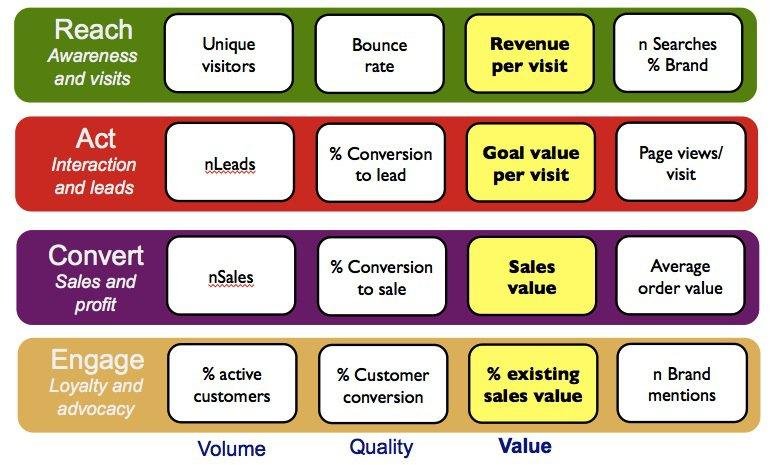
Index
- Key indicators to measure the performance of your digital campaigns
- How to correctly interpret the conversion rate in online marketing
- Detailed analysis of the return on investment (ROI) in digital actions.
- Recommendations for optimizing the cost per acquisition (CPA)
- Keys to improve click-through rate (CTR) in advertising campaigns
- Frequently Asked Questions
- Conclusions
Key indicators to measure the performance of your digital campaigns
To optimize your digital campaigns, it is essential that you carefully select and analyze some key performance indicators (KPIs). This data will allow you to understand which aspects are working well and which need to be improved in order to obtain better results.
Among the most relevant KPIs you should monitor are:
- Click-through rate (CTR): percentage of users who click on your ads or links.
- Cost per acquisition (CPA): how much it costs you to get each customer or conversion.
- Return on investment (ROI): measures the revenue generated versus the expenditure made in the campaigns.
- Conversion rate: percentage of visitors who perform a desired action (purchase, register, download).
- Cost per click (CPC): the average cost per click received on your ads.
In addition, it is advisable to periodically evaluate metrics related to the interaction and satisfaction of your users, such as average time on page, bounce rate, frequency of visits or the level of engagement in social networks. These complementary data will help you obtain an overall view of the performance of your digital efforts, allowing you to make more accurate and effective decisions. 
How to correctly interpret the conversion rate in online marketing
Conversion rate is one of the most important metrics, but it is key to know how to interpret it correctly. To do so, you must first clearly understand what specific action you are measuring: it could be a sale, a subscription, a download of a free resource or any other specific goal of your campaign.
In addition, not all conversions have the same value. For example, a direct sale has a much higher weight than a free download. Therefore, it is important to segment conversions and analyze them according to their real value for your business.
To correctly interpret this KPI, also take into account other factors such as:
- The traffic channel: What source generates the conversion?
- Traffic quality: Are they interested users or casual visitors?
- The temporal context: Are there seasonal fluctuations or active promotions?
By analyzing these factors together, you will gain a clear and useful insight to optimize your campaigns and improve your results.
Detailed analysis of the return on investment (ROI) in digital actions.
Understanding how to measure and evaluate the return on investment (ROI) of your digital actions is key to optimizing your budget and maximizing results. ROI will tell you whether a campaign is really profitable and which specific actions generate the most benefit, allowing you to make better decisions.
To calculate ROI, you must consider essential factors such as:
- Revenue generated: direct sales, conversions and long-term customer value.
- Associated costs: advertising investment, tool costs, content creation and hours spent.
Here is a practical and simple example of how to analyze the ROI of two different digital campaigns:
| Campaign | Investment (€) | Revenue (€) | ROI (%) |
|---|---|---|---|
| Social Media Advertising | 500 | 1.500 | 200% |
| Email Marketing | 250 | 1.000 | 300% |
This analysis allows you to clearly identify which campaigns offer you a better return, adjusting your strategy to invest more in those with better performance.
Recommendations for optimizing the cost per acquisition (CPA)
Optimizing your cost per acquisition (CPA) is essential to maximize the profitability of every euro invested in your digital campaigns. To achieve this, it is essential to continuously analyze and adjust your strategies through rigorous testing and monitoring. Here are some practical recommendations to improve your results:
- Segment your audiences: Divide your target audience into smaller groups based on interests, behavior or location. This way you can personalize messages and increase the relevance of your ads.
- Optimize the landing page: A clear, attractive and conversion-oriented landing page can significantly reduce the cost of acquisition. Focus on a simple design, a clear value proposition and a strong call to action.
- Perform A/B tests: Experiment with different ad formats, texts, images and calls to action. The data obtained will tell you which version generates better results to reduce the CPA.
In addition, pay attention to the following key elements that directly influence your acquisition costs:
| Element | Recommended action |
|---|---|
| Key words | Identify and boost the keywords with the best conversion. |
| Publishing schedule | Adjust your ads to the times when your audience is most active. |
| Devices | Evaluate and optimize ads based on mobile or desktop performance. |
Keys to improve click-through rate (CTR) in advertising campaigns
To get more clicks on your ad campaigns, it is essential that you capture the attention of your audience from the very first moment. The secret is to optimize key elements such as titles, images and calls to action (CTAs). Use eye-catching titles that arouse curiosity, relevant and attractive images, and clear CTAs that indicate exactly what the user will get when they click.
In addition, you can apply these practical recommendations to further improve your CTR:
- Segment your audience well: target specific ads that respond to specific interests.
- Test multiple versions: experiment with different text, images and formats to identify what works best.
- Work on urgency: include terms such as “today only”, “last units” or “for a limited time”.
Below is a table with practical examples of CTR optimization in ads:
| Advertisement element | Initial version | Optimized version |
|---|---|---|
| Title | “Buy now shoes” | “Exclusive shoes 30% off today only”. |
| CTA | “Click here” | “Get your discount now” |
| Image | Generic picture of the product | Image highlighting the benefit of the product |
Frequently Asked Questions
Question: What exactly are KPIs in online marketing campaigns?
Answer: KPIs (Key Performance Indicators) are metrics that allow you to evaluate the performance of your online marketing campaigns. They help you measure whether you are achieving your goals, identify weaknesses and strengths in your strategy, and guide future decisions based on real data.
Question: Why is it important to measure KPIs in digital marketing?
Answer: Measuring KPIs is fundamental because it allows you to check if your campaign is meeting the established objectives, optimize investments and efforts, and better understand your audience. By analyzing these indicators, you can make better and more profitable decisions in the long term.
Question: What types of KPIs can I use to evaluate my online campaigns?
Answer: There are different types of KPIs depending on your objectives. Some common examples include conversion rate, CPC (cost per click), ROI (return on investment), CTR (click-through rate), bounce rate, customer acquisition cost (CAC) and open rate in email marketing campaigns.
Question: How can I choose the right KPIs for my specific campaign?
Answer: To choose the right KPIs, you must first clearly define your marketing objectives. For example, if you are looking to increase sales, the KPI could be conversion rate or ROI. If you are looking for brand awareness, you could measure reach or impressions. Always select those KPIs that align directly with what you want to achieve.
Question: When should I review and analyze the KPIs of my campaigns?
Answer: It is advisable to do periodic reviews, depending on the duration and objectives of your campaign. For example, you could analyze short-term campaigns on a weekly basis or long-term campaigns on a monthly basis. This way, you will be able to identify trends in time and make timely adjustments.
Question: What tools can I use to monitor online marketing KPIs?
Answer: There are several tools, from free to paid, that allow you to monitor KPIs. Among the most popular are Google Analytics, Google Ads, Facebook Ads Manager, HubSpot and SEMrush. The choice will depend on your specific needs and available budget.
Question: What do I do if I discover that my KPIs are not achieving the expected objectives?
Answer: If this happens, you should review your strategy in detail to identify possible problems or points for improvement. You can adjust aspects such as segmentation, advertising messages, design or channels used. The important thing is to react in a timely manner to optimize your campaign and improve your results.
Conclusions
Now that you know which KPIs are essential to measure the success of your online marketing campaigns, it’s time to put them into practice. Remember that it’s not just about collecting data, but analyzing it to make strategic decisions that will drive your business growth.
Use these key indicators regularly to optimize your campaigns, identify opportunities for improvement and increase the profitability of your investments. With consistency and focused analysis, you will achieve increasingly solid and sustainable results in your digital projects.
If you have any doubts or want to deepen in any specific aspect, leave me your comment and I will be happy to help you on the road to online success.