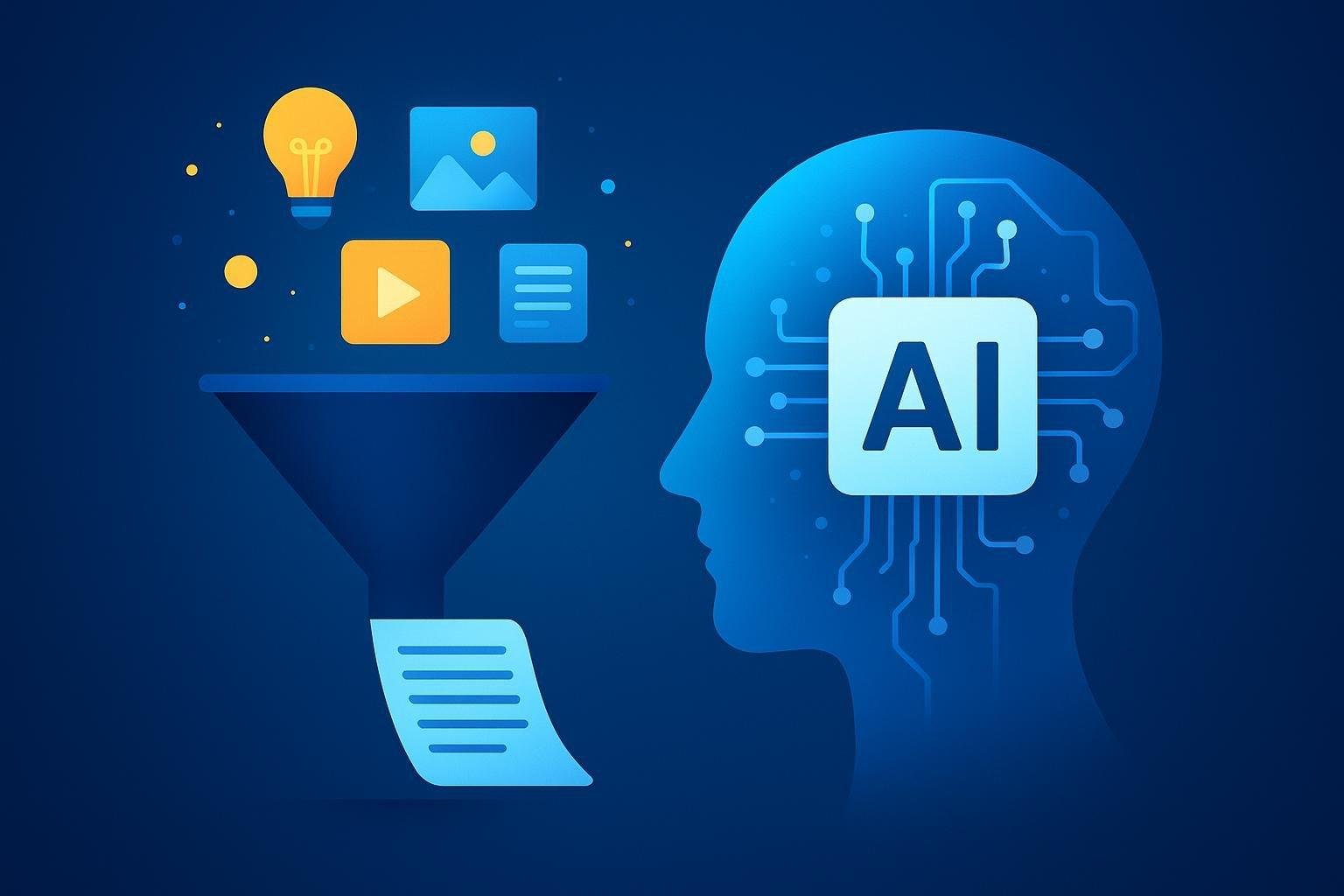
Artificial intelligence has radically transformed the way you can create original content for your digital business. Thanks to advanced tools like ChatGPT and other generative platforms, you now have the ability to produce unique text, images and videos faster and more efficiently.
However, to make the most of these tools, it is essential to understand how to integrate them correctly into your strategy and avoid falling into unethical practices or being penalized by search engines. In this article you will discover the true role of artificial intelligence in the generation of original content, as well as its advantages, limitations and best practices to enhance your online presence. 
Index
- Artificial intelligence as a creative tool for original content generation
- Ethical and legal impact of the use of artificial intelligence in creative content.
- How to optimize collaboration between human creators and artificial intelligence systems
- Practical recommendations for integrating artificial intelligence without losing authenticity and originality
- Future prospects: challenges and opportunities in the creation of original content with artificial intelligence
- Frequently Asked Questions
- To conclude
Artificial intelligence as a creative tool for original content generation
Artificial intelligence (AI) has become an essential ally to boost your creativity when generating original content. Thanks to advanced tools such as ChatGPT, Jasper or Copy.ai, you can now produce unique and attractive texts in minutes, even if you have never written an article or publication before.
These platforms allow you to:
- Generate fresh ideas: get immediate inspiration for creative themes, titles and approaches.
- Optimize texts for SEO: improve the visibility of your content by adapting it to the requirements of search engines.
- Save time and resources: accelerate your content production, reducing costs and efforts.
In addition, by combining your personal vision with the suggestions provided by AI, you will achieve differentiated and authentic content that will connect deeply with your audience. The key is to use artificial intelligence not to replace your creativity, but to enhance it and take it to the next level. 
Ethical and legal impact of the use of artificial intelligence in creative content.
When incorporating artificial intelligence into your creative process, you should carefully consider the ethical and legal implications. While AI tools can significantly accelerate your content production, using them without precautions could lead to conflicts related to authorship, intellectual property rights and originality.
To avoid legal risks, be clear about the following:
- Copyright: Ensure that AI-generated content does not infringe on third-party rights or plagiarize existing content.
- Transparency: If you use AI to create content for third parties, clearly report its use, ensuring transparency with your audience.
- Privacy and data: Check that the tools used respect the regulations on personal data protection.
Remember that knowing and respecting these aspects not only protects your project from a legal point of view, but also strengthens your credibility and reputation with clients and followers.
How to optimize collaboration between human creators and artificial intelligence systems
To achieve a successful collaboration between you and artificial intelligence, you must first understand what your strengths are and what AI’s are. While you bring creativity, strategic intuition and emotional sensitivity, artificial intelligence excels at repetitive tasks, massive data analysis and rapid generation of initial ideas.
Some best practices to optimize this collaboration are:
- Clearly define the role of each party: use AI to research topics, generate initial drafts or analyze keywords, and reserve for yourself the final editing, adaptation to the human context and emotional personalization of the content.
- Establish a clear workflow: determine concrete steps for the AI intervention and then you intervene to refine, expand or modify your proposal.
- Continuously evaluates and adjusts: periodically reviews the results obtained to identify possible improvements in the interaction and efficiency of the joint work.
In addition, you can use visual tools to organize this collaboration and monitor the results obtained:
| Tool | Main function | Key Advantage |
|---|---|---|
| Trello | Collaborative task management | Visual clarity of workflow |
| Notion | Joint documentation and planning | Flexible AI-human content integration |
| Google Analytics | Content performance analysis | Accurate data to optimize future collaborations |
Practical recommendations for integrating artificial intelligence without losing authenticity and originality
To integrate artificial intelligence (AI) into your content creation strategy without sacrificing authenticity, it is critical that you use it as a complementary tool, not as a total replacement for your personal voice and style. For example, you can use AI to get initial ideas, structure copy or generate quick drafts, but always be sure to review, edit and infuse each piece with your unique perspective.
Consider these practical recommendations to keep the relationship between technology and originality in balance:
- Clearly define your style and tone: Before integrating AI tools, identify which aspects of your communication are unique and make sure to keep them intact.
- Always verify and personalize: AI can produce accurate and useful content, but your responsibility is to verify the information and adjust it to reflect your personality and values.
- Generate human interaction: Complement your AI-generated content with personal experiences, real-life examples and anecdotes that connect emotionally with your audience.
Remember that the key is to use AI as another resource in your creative process, always keeping the personal touch that will make your audience identify with you and trust your message.
Future prospects: challenges and opportunities in the creation of original content with artificial intelligence
Artificial intelligence is evolving rapidly and brings with it great opportunities for those who want to create original content. Tools such as ChatGPT, Midjourney or Jasper can help you produce text, images or videos more efficiently, allowing you to scale your content quickly and reach wider audiences.
However, you will also face significant challenges. You will have to strive to differentiate yourself in a saturated environment, where many competitors use similar tools. Some keys to overcoming these challenges are:
- Personalization: tailor AI-generated content to your style and the specific needs of your audience.
- Human creativity: bring fresh and original ideas that AI alone cannot easily replicate.
- Ethics and transparency: communicate clearly to your audience when you use content created by artificial intelligence.
Below is a brief summary of challenges and opportunities:
| Challenges | Opportunities |
|---|---|
| High competition in AI-generated content | Increased productivity and cost reduction |
| Loss of originality if you do not bring human creativity to the table | Possibility of rapidly scaling your digital business |
| Ethical risks and potential legal issues | Constant innovation and new creative applications |
Frequently Asked Questions
What is artificial intelligence applied to the creation of original content?
Artificial intelligence applied to the creation of original content refers to the use of algorithms and computational models capable of generating texts, images, videos, music and other types of content autonomously, imitating and even improving the human creative process.
How does artificial intelligence work in content generation?
Artificial intelligence uses machine learning and deep learning algorithms that analyze large amounts of existing data to identify patterns. These models then use these patterns to produce new, original and coherent content.
What are some practical examples of the use of artificial intelligence in content creation?
Among the best-known examples are tools that automatically generate advertising copy, systems that write short news stories, platforms that create original images or videos based on simple prompts, and even applications capable of composing musical pieces based on certain established parameters.
Can artificial intelligence completely replace human labor in content creation?
While artificial intelligence can generate quality content and save time, for now it cannot completely replace human creativity, sensitivity and expertise. It is common to use these tools as a supplement to streamline repetitive processes or as a source of inspiration, but the human touch is still essential.
What are the advantages of using artificial intelligence to generate original content?
Among the main advantages are the speed of content generation, cost reduction, the ability to work continuously without fatigue and the possibility of creating large volumes of content optimized for specific audiences.
What are the current limitations of artificial intelligence when it comes to creating original content?
Artificial intelligence still has limitations in areas such as deep understanding of context, emotional empathy and the generation of innovative or disruptive ideas. In addition, it can sometimes make mistakes or generate content that is incoherent or unnatural.
How can you leverage artificial intelligence to improve your content creation strategy?
You can use artificial intelligence tools to automate repetitive tasks, produce initial drafts that you later refine, or adapt content to different audiences easily. In addition, these tools can help you analyze trends and generate ideas that complement your personal creativity.
Are there ethical or legal implications of using artificial intelligence to create original content?
Yes, there are important ethical and legal implications, such as copyright protection, transparency about the use of artificial intelligence (so that users know what content has been generated by a machine) and liability for possible biases or errors generated by these systems.
What could be the future of artificial intelligence in the creation of original content?
In the future, we are likely to see greater integration of artificial intelligence in creative processes, with even more precise tools capable of generating more personalized content tailored to each user. However, it will also be essential to maintain the balance between automation and human creativity to ensure content of quality and value.
To conclude
Artificial intelligence has opened up new avenues for the creation of original content, allowing you to generate fresh ideas, optimize your time and increase your productivity.
However, remember that the key to success lies in finding the right balance between automation and your unique human touch.
If you are considering integrating artificial intelligence tools into your content strategy, start by testing different platforms and evaluating which ones best fit your specific objectives.
Always keep up to date with the latest trends in technology, adapt your approach and continue training to stand out in this highly competitive digital environment.
Now it’s your turn: are you ready to harness the full potential of artificial intelligence and take your digital project to the next level?