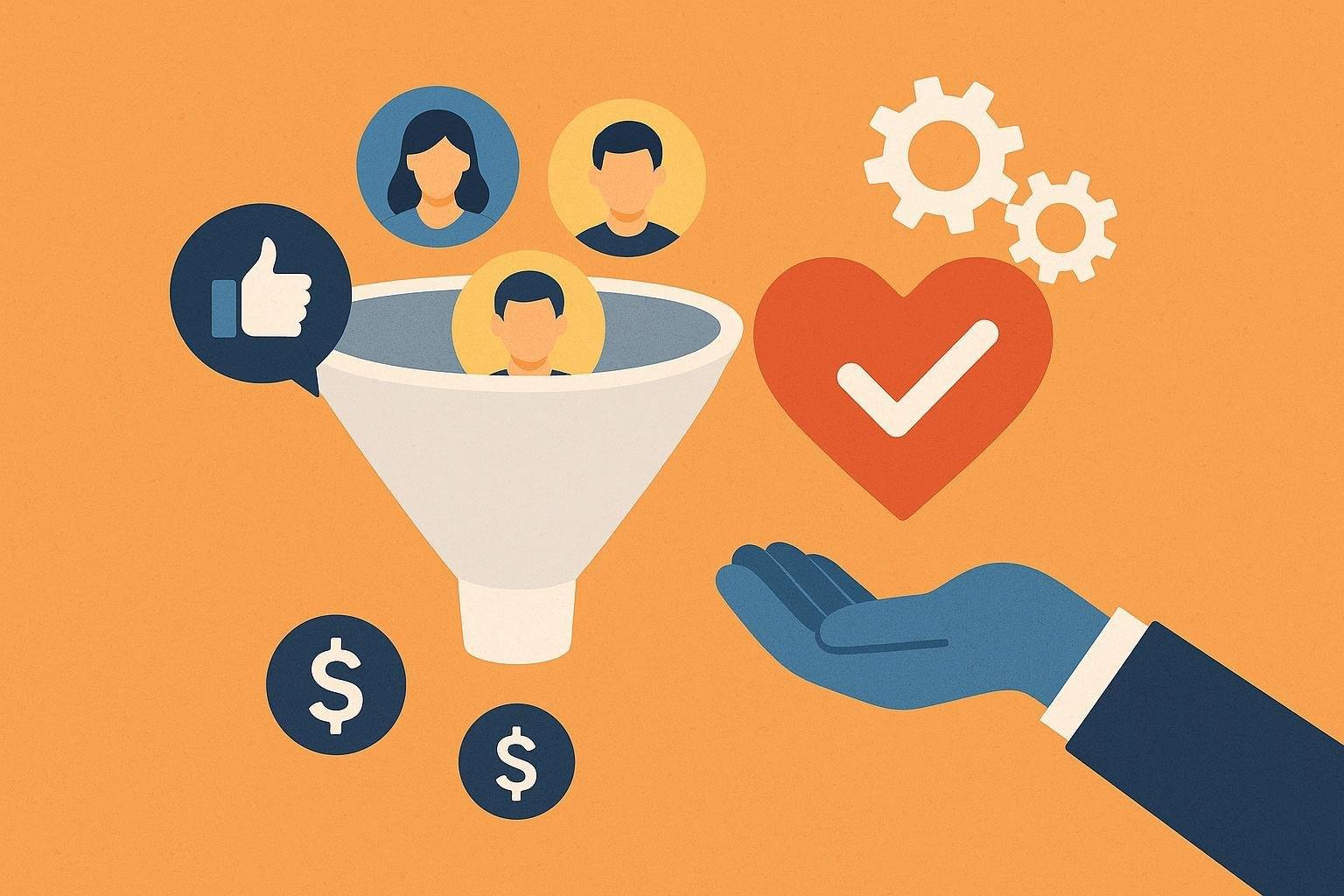

If you want to make the digital leap and increase your business sales, you need to understand how a multichannel sales funnel works. A well-structured funnel allows you to capture leads from different online platforms and guide them step-by-step to purchase, optimizing each interaction.
In this article you will discover how to create an effective funnel that leverages multiple digital channels, from social media to email marketing. You will learn how to attract, nurture and convert leads, thus improving the profitability and scalability of your online business. 
Index
- Understands the key stages of the multichannel sales funnel and how to connect them effectively
- Identify the right channels according to the behavior and profile of your customers
- Develops content tailored to each channel to optimize conversion at each stage
- Implements tracking and analytics tools to assess funnel performance
- Continually optimize your multichannel strategy through data-driven testing and adjustment
- Frequently Asked Questions
- Conclusions
Understands the key stages of the multichannel sales funnel and how to connect them effectively
To create a multichannel sales funnel that works effectively, you must first know the key stages that your potential customers go through. These stages are fundamental to guide the user from the moment they discover your brand until they make a purchase or recommendation. The main stages you should consider are:
- Discovery: The user gets to know your brand or product for the first time through social networks, online advertising or organic content (blog, podcast, video).
- Interest and consideration: The user investigates more about your proposal, compares with other alternatives and seeks opinions and testimonials.
- Conversion: The key moment when your lead becomes a customer through a purchase, registration or enrollment.
- Loyalty and recommendation: You generate continuous value and positive experiences to turn the customer into an ambassador of your brand.
Each digital channel has a specific role in these stages. For example, use Instagram or TikTok to attract initial attention, email marketing to reinforce the relationship and offer valuable content, and remarketing through paid ads to win back undecided users. The key is to integrate these channels, ensuring a consistent experience at every step of the customer journey, which will significantly increase your conversions and profitability. 
Identify the right channels according to the behavior and profile of your customers
To effectively connect with your customers, you must understand where they spend their time and how they interact with different digital channels. Analyze key aspects such as age, interests, consumption habits and the devices they use most. This will allow you to focus your resources on the platforms that really work for your audience.
For example, if you are targeting a young audience interested in fashion and influencers, Instagram or TikTok will be ideal channels. On the other hand, if your target customer is a seasoned professional or a B2B company, LinkedIn and email marketing campaigns may offer better results. Consider the following examples according to customer profile:
| Customer Profile | Recommended channels | Type of effective content |
|---|---|---|
| Young people (18-25 years old) | Instagram, TikTok | Short videos, stories, influencer marketing |
| B2B Professionals | LinkedIn, Email Marketing | Specialized articles, case studies and webinars |
| Families and adults (+35 years old) | Facebook, YouTube | Tutorials, testimonials, personalized ads |
Remember that clearly identifying these channels and formats not only optimizes your investment, but also significantly improves the user experience and the effectiveness of your campaigns.
Develops content tailored to each channel to optimize conversion at each stage
Each digital platform has unique characteristics and different audiences, so you can’t simply replicate the same content across all channels. To optimize your conversions, tailor your message to the stage of the funnel your audience is in:
- Social Media (Awareness): Post engaging visual content, quick tips or short videos that grab attention and spark initial interest.
- Blog and Newsletter (Consideration): Provide value with practical guides, extensive tutorials or success stories that delve into your audience’s specific needs and solutions.
- Email Marketing and Landing Pages (Conversion): Deliver direct and persuasive content focused on clear benefits, compelling testimonials and targeted calls to action to increase sales.
Use analytics tools such as Google Analytics or those integrated in social networks to analyze which formats work best in each channel. Periodically adjust your content to continuously improve your results and effectively meet your prospects’ expectations.
Implements tracking and analytics tools to evaluate funnel performance
When you launch your funnel, you need to know exactly what happens at each stage. Tracking and analytics tools allow you to identify strengths and weaknesses, thus optimizing your efforts and resources. Some of the most effective ones you can use are:
- Google Analytics: provides key metrics on traffic, behavior and conversions.
- Hotjar: generates heat maps to visualize how your users interact with your site.
- Facebook Pixel: measures the effectiveness of your ads on social networks and allows retargeting.
To simplify data interpretation, set clear key performance indicators (KPIs). Here are some practical examples that you can use in your funnel:
| Funnel stage | Recommended KPI | Suggested tool |
|---|---|---|
| Attraction | Click-through rate (CTR) | Google Analytics, Facebook Insights |
| Conversion | Conversion rate (%) | Google Analytics, Hotjar |
| Loyalty | Repurchase rate (%) | CRM, Email Marketing Analytics |
Regularly review this data and make decisions based on real numbers, not assumptions. This practice will allow you to continuously adjust your funnel, improving your results and increasing the profitability of your digital business.
Continually optimize your multichannel strategy through data-driven testing and adjustments
The key to success with your multichannel strategy lies in constantly measuring, analyzing and optimizing your actions. Use analytical tools such as Google Analytics, Hotjar or specific email marketing platforms to collect data on user behavior in each channel. Observe which messages, formats and offers generate greater engagement and which do not achieve the expected results.
Perform A/B testing frequently to identify opportunities for improvement. Some key aspects you can test are:
- Email subjects: length, tone and calls to action.
- Ads in social networks: images, texts and segmentation.
- Landing pages: design, titles and button colors.
Once you have clear data, adjust your strategy according to what really works, discarding what does not contribute to your objectives. Remember that continuous optimization is a dynamic process and always aimed at improving the user experience and increasing your conversions.
Frequently Asked Questions
What is a multichannel sales funnel and why is it important?
A multichannel sales funnel is a strategic process that integrates different communication and marketing channels to guide the potential customer from the first contact to the final purchase. It is important because customers increasingly interact with different platforms and devices, so offering an integrated and consistent experience across all of them significantly increases the chances of conversion.
How can you identify which channels are most effective for your funnel?
First, analyze where your target audience is located and which platforms they use frequently. Also evaluate the historical performance of your previous campaigns to identify which channels have generated the most engagement, conversions and ROI. Clear analytical tools and metrics will help you determine where to best focus your efforts.
What are the key stages in the structure of a multichannel funnel?
Generally, the key stages of a multichannel funnel include awareness (attracting the potential customer), consideration (offering relevant information and added value), conversion (generating a specific purchase or action) and loyalty (maintaining the relationship and encouraging future purchases). Each stage requires tailored messages and specific strategies, depending on the channel used.
How can you maintain consistency in your cross-channel communication?
Consistency is achieved through a clear and consistent message at every stage of the funnel, regardless of the channel. For this, it is essential that you define a uniform tone of voice, design and editorial line beforehand. In addition, make sure that all channels are aligned and that the user experience is smooth, avoiding contradictions or confusing information.
What tools can you use to optimize your multichannel funnel?
There are several tools that can help you manage and optimize your multichannel funnel, such as CRM (Customer Relationship Management) platforms, marketing automation software, web analytics tools and social media management platforms. These tools allow you to centralize data, automate processes and track performance in each channel in detail.
How can you measure the effectiveness of your multichannel funnel?
To measure effectiveness you need to define specific key performance indicators (KPIs) for each stage of the funnel. Some examples are email open rate, digital ad click-through rate, landing page conversion rate and customer retention rate. Regularly analyze this data to identify strengths and weaknesses in your strategy.
What common mistakes should you avoid when structuring your multichannel funnel?
Among the most common mistakes are not knowing your audience’s behavior in depth, not personalizing your communication, ignoring consistency between channels, not measuring results correctly or not adjusting the strategy according to the data obtained. Avoiding these mistakes will significantly improve the effectiveness of your multichannel funnel.
Conclusions
Now that you know how to structure a multichannel sales funnel, it’s time to put your learnings into practice and adapt this strategy to your online business. Remember that each channel has its own particularities, and optimizing your funnel requires constant analysis and periodic adjustments.
Start small, measure results and learn from each interaction with your audience. As you progress, you will gain experience and confidence to create more sophisticated and effective funnels.
If you have questions or want to share your experience, leave me a comment below; I’ll be happy to help you on your way to digital success. It’s time to take the next step to take your online business to the next level!