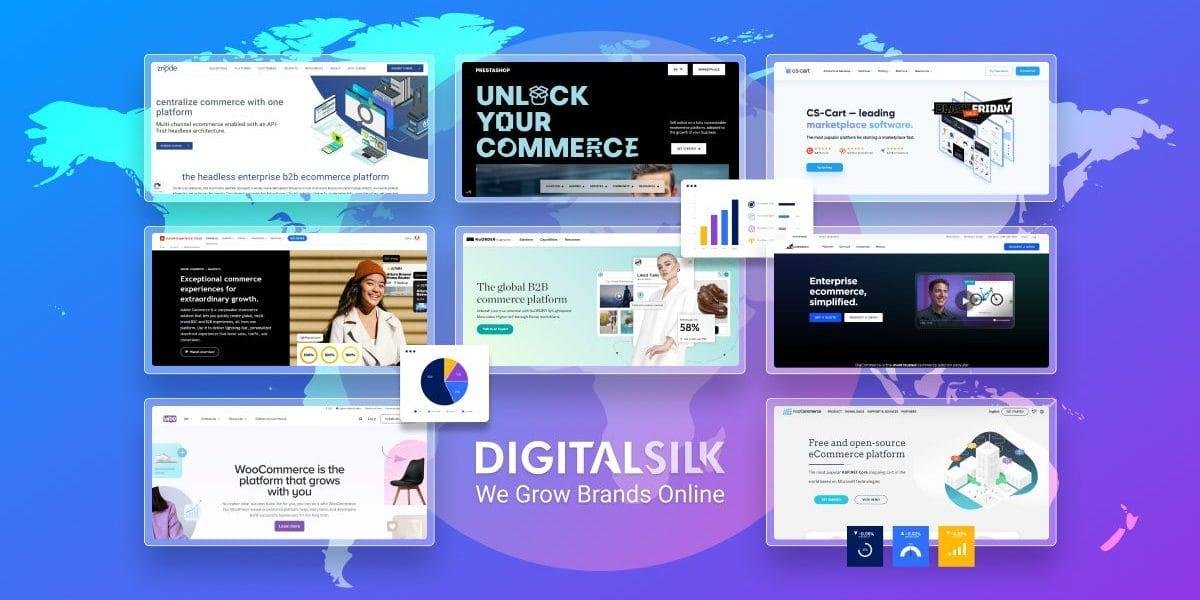
If you are thinking of selling products or services online, choosing the right platform will be key to get your online business off to a good start. Nowadays there are numerous ecommerce tools that are easy to use, even if you have no previous experience in digital marketing or programming.
In this article I will introduce you to the best e-commerce platforms specially adapted to entrepreneurs like you, so you can easily identify the option that best suits your needs. You will discover their main features, advantages and disadvantages, and how each one can help you take your first steps towards online success. 
Index
- Most popular ecommerce platforms: key features for entrepreneurs
- Comparison of costs and tariffs: how to choose the platform that best suits your budget
- Ease of use and customization: recommendations for beginners and advanced users
- Essential integrations and tools to power your online store
- Security and payment methods: reliable platforms to protect your business and your customers
- Frequently Asked Questions
- To conclude
Most popular ecommerce platforms: key features for entrepreneurs
When choosing an ecommerce platform you should consider factors such as ease of use, cost, scalability and integrated features. Here is a brief overview of the most popular options and their key features:
| Platform | Ease of use | Initial cost | Scalability | Outstanding features |
|---|---|---|---|---|
| Shopify | High | Medium | High | Integrated payments, apps, 24/7 support |
| WooCommerce | Media | Low | High | Customization, advanced SEO |
| PrestaShop | Media | Under | Media | Multistore, advanced catalog |
If you are looking for a simple option, quick to implement and don’t want to worry about technical issues, Shopify can be an excellent alternative. If you prefer more flexibility and control over your design and SEO optimization, WooCommerce on WordPress will be your best ally. On the other hand, PrestaShop is ideal if your project is focused on managing large product catalogs and multiple stores from a single platform.
Remember to carefully evaluate your current and future needs before deciding on a platform. Consider aspects such as your available budget, your technical level and the growth projection of your business. This way you will choose the option that best suits your business. 
Comparison of costs and tariffs: how to choose the platform that best suits your budget
Choosing the right platform will depend on your initial budget and the fixed monthly costs you are willing to assume. The most popular platforms usually offer plans with monthly fees, commissions per sale or a combination of both.
For example, Shopify offers plans from €29/month with variable commissions depending on the payment method, while WooCommerce is free, but involves additional costs such as hosting and premium plugins. Here is a simple comparison overview:
| Platform | Monthly fee | Commission per sale | Additional costs |
|---|---|---|---|
| Shopify | Starting at 29€. | 1-2% | Paid Apps |
| WooCommerce | Free | No | Hosting, premium plugins |
| PrestaShop | Free | None | Premium modules, hosting |
I recommend you to carefully analyze the features you really need and calculate an annual cost forecast. This way you will avoid surprises and you will be able to select the option that best fits your financial capacity and growth expectations.
Ease of use and customization: recommendations for beginners and advanced users
When starting your first online store, choosing a simple and intuitive platform is key to avoid frustration and focus on selling. Shopify and Wix are ideal choices for beginners, as they offer easy-to-understand visual interfaces, pre-designed templates and drag-and-drop editors that don’t require technical knowledge.
As you gain experience and look for more customization, platforms like WooCommerce (integrated with WordPress) or PrestaShop give you absolute flexibility. These tools allow you to modify the code, add specific functionalities via plugins and quickly adapt to the growth of your business. To help you decide, here is a quick comparison according to your level:
| Level | Recommended platforms | Main advantages |
|---|---|---|
| Beginner | Shopify, Wix | Easy to use, technical support, no coding |
| Advanced | WooCommerce, PrestaShop | High customization, open source, unlimited plugins |
Remember that the important thing is to choose a platform that suits your current experience, but also one that can grow with you as you move forward in the world of ecommerce.
Essential integrations and tools to power your online store
For your online store to reach its full potential, you need to have tools and integrations that simplify processes, improve the user experience and optimize conversions. Among the essential integrations are secure payment gateways such as PayPal, Stripe and Mercado Pago, which build trust and facilitate seamless transactions in multiple currencies.
In addition, you should consider specialized tools that boost your marketing and customer service strategies, such as:
- MailChimp or ActiveCampaign: to automate email marketing campaigns.
- Google Analytics: to understand the behavior of your visitors and improve your strategies.
- Zendesk or LiveChat: to offer fast and effective support.
The strategic combination of these tools will allow you to efficiently manage your store, attract more customers and continuously improve your digital presence.
Security and payment methods: reliable platforms to protect your business and your customers
Security and ease of payment management are key aspects for the success of your online business. When choosing an ecommerce platform, you must ensure that it has SSL certificates to encrypt information, user authentication and fraud protection. In addition, it is essential to offer recognized and secure payment methods to generate confidence in your customers.
Some reliable platforms that stand out in security and payment management are:
- Shopify: direct integration with gateways such as PayPal, Stripe and card payments, automatic SSL encryption and advanced anti-fraud systems.
- WooCommerce: compatible with multiple security plugins and secure payments, ideal for adapting methods such as PayPal, Redsys or bank transfer.
- PrestaShop: includes by default secure options and specific modules for local payments, complying with European regulations such as PSD2.
Consider also offering alternative payment methods such as Bizum or cash on delivery, especially in Spain, to attract customers who prefer not to use cards or digital payments. Always keep your platform updated to avoid vulnerabilities and ensure long-term trust and loyalty.
Frequently Asked Questions
What factors should you take into account when choosing an ecommerce platform?
When choosing a platform for your online store, you should consider aspects such as ease of use, cost, scalability, customization options, available payment methods and compatibility with additional tools you may need in your business.
What are some of the most popular ecommerce platforms for entrepreneurs?
Some of the most popular platforms among entrepreneurs are Shopify, WooCommerce, PrestaShop, Magento and Wix eCommerce. Each offers different features and advantages depending on the type and size of your business.
Is it necessary to have advanced technical knowledge to manage an online store?
Not necessarily. There are platforms, such as Shopify or Wix eCommerce, that stand out for being intuitive and easy to use, ideal if you have little technical experience. On the other hand, WooCommerce and Magento are more complex and offer greater customization options, but require minimal technical knowledge or the help of a professional.
What costs are usually associated with the use of these platforms?
Costs vary depending on the platform you choose. Some have monthly fee plans, others are free but require you to pay for additional services such as hosting, premium themes, plugins and specialized technical support. It is important to evaluate these additional costs to choose the option that best suits your budget.
How can you ensure that your online store is safe for you and your customers?
To ensure the security of your online store, make sure you choose a platform that offers SSL certificates, secure payment methods and frequent updates to protect against vulnerabilities. In addition, always keep all the applications and plugins you use up to date.
Do ecommerce platforms allow me to adapt my online store to mobile devices?
Yes, nowadays, most ecommerce platforms allow you to adapt your online store to mobile devices through responsive designs. This is essential for your customers to have a good shopping experience, regardless of the device from which they access.
What options do you have to promote and position your online store?
Ecommerce platforms usually offer different tools to promote your business, such as integration with social networks, SEO optimization, email marketing and options to create advertising campaigns. It is also important that you develop a complementary digital marketing strategy to increase the visibility of your store.
Is it possible to integrate your online store with other tools you already use in your business?
Yes, many platforms allow integrations with external tools such as inventory managers, accounting systems, CRM and email marketing platforms, thus facilitating the management and automation of different key aspects of your business.
What support do ecommerce platforms offer?
Support varies by platform. Some offer 24/7 support via chat, email or phone, while others have community forums and detailed documentation. Before choosing a platform, make sure that its support system suits your needs.
Can you switch platforms in the future if your business grows or your needs change?
Yes, it is possible to migrate your online store to another platform if your needs change. However, it is important to consider that migrating may involve additional costs and require technical assistance to ensure that no data or SEO positioning is lost during the process.
To conclude
I hope this article has helped you better understand the main ecommerce platforms available and which one can best suit your business. Remember that the success of your online store will largely depend on choosing a platform that fits your goals and allows you to grow in the long term.
The important thing is that you take the first step, start experimenting and learn as you go. Don’t be afraid to make mistakes, as they will be a fundamental part of your learning and growth process.
If you have any questions or need help to start your ecommerce project, leave me a comment below and I’ll be happy to help you, best wishes and success with your online store!